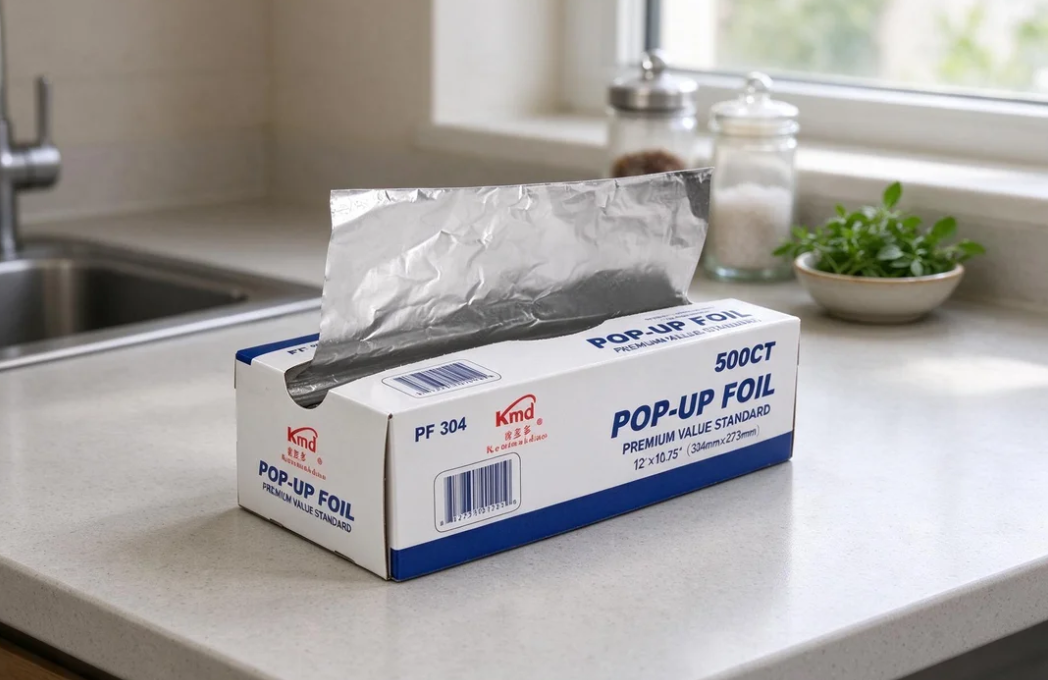
Walk into any supermarket today, and you’ll see them everywhere—those shiny aluminum foil containers holding takeout meals, bakery items, frozen foods, and catering portions. The global demand for aluminum foil packaging isn’t just growing; it’s accelerating.

That’s why more investors than ever are asking the same question: What’s the real aluminum foil container machine price?

Here’s the thing most first-time buyers misunderstand. The machine price alone tells you almost nothing about what you’ll actually pay to start producing. From what we’ve seen in hundreds of factory projects across Southeast Asia, Africa, the Middle East, and South America, the lowest-priced machine often becomes the most expensive investment within six months.

This article isn’t a price list—those change weekly based on steel costs, exchange rates, and configuration details. Instead, think of this as a practical guide written by someone who’s watched buyers succeed and fail. We’ll walk through real costs, hidden traps, and what actually matters when you’re putting money down on foil container production equipment.

What Is the Typical Aluminum Foil Container Machine Price?

When looking at an aluminum foil container machine, there is no single “standard” price. The cost varies dramatically based on production capacity, automation level, and the complexity of the setup. In actual production, you aren’t just buying a press; you are buying a foil container production line.

To give you a realistic idea of the market without using artificial or misleading quotes, the investment typically falls into three main tiers:

Entry-Level / Semi-Automatic Setups

These systems usually feature a basic mechanical press with mechanical feeding systems. While the upfront machine price is low, they require more manual labor for collecting, stacking, and packaging the finished containers. They are suitable for small startups testing a local market with a single, simple container design.

Mid-Range Automatic Production Lines

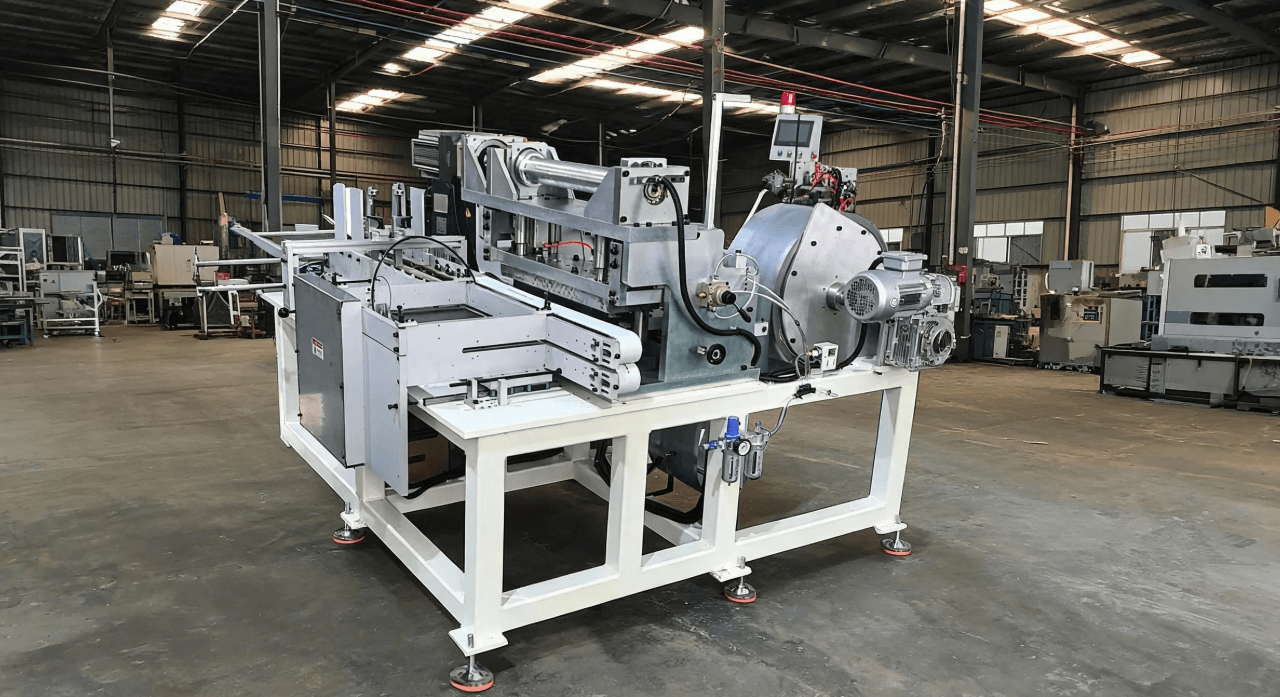
This is where most established packaging businesses begin. These lines feature an automatic foil container machine integrated with an electronic servo feeder, a pneumatic/mechanical press (typically around 63 to 80 tons), a scrap foil baler, and an automatic collecting stacker.

High-End, High-Speed Fully Automatic Lines

Designed for 24/7 industrial production, these lines utilize heavy-duty H-frame press (80 tons to 130 tons or more). They feature advanced PLC control systems, high-speed multi-cavity mold compatibility,  and fully automated multi-lane stacking systems.

Why Some Machines Are Much More Expensive?

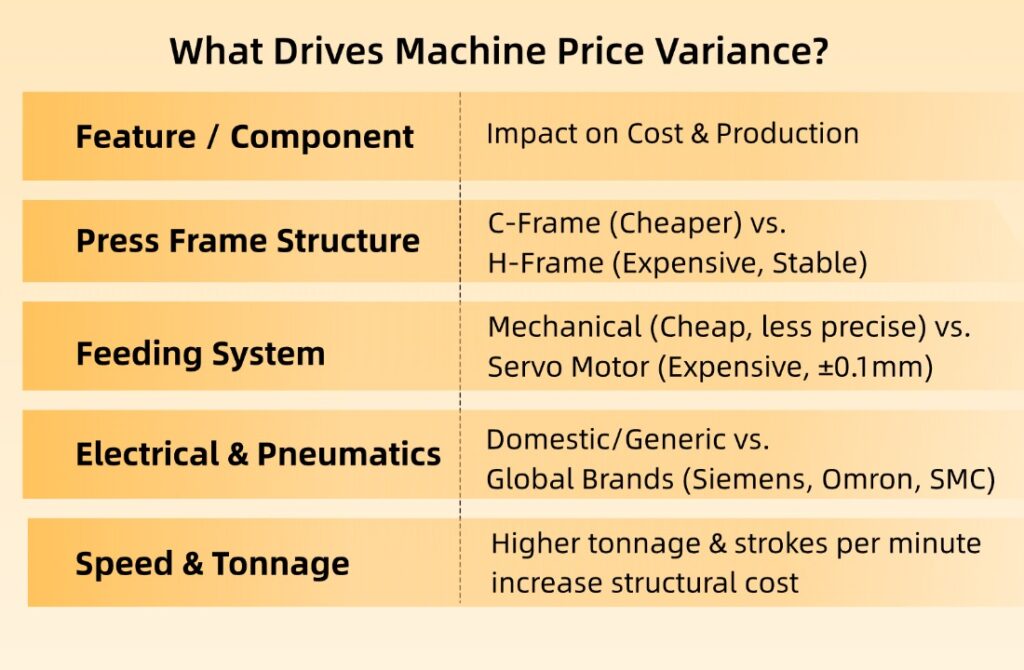
It’s common to see two machines that look almost identical on a website have a price variance of $30,000 or more. Why does this happen? In the food packaging machinery industry, the differences lie beneath the surface paint.

1. Frame Structure and Tonnage

Cheap machines often use a standard C-frame structural design. While fine for light work, it can flex slightly under heavy loads over time. Higher-priced machines use a closed H-frame structure. This minimizes vibration, extends the lifespan of your expensive aluminum foil container mold, and ensures consistent product quality.

2. Servo Feeding Precision

The feeding system moves the raw aluminum foil into the press. Cheaper lines use older mechanical stepping systems. Premium lines use high-precision servo feeding systems. If a cheap feeder miscalculates by just a fraction of a millimeter per stroke, you end up wasting thousands of dollars in scrap material over a single month.

3. Component Origins

Are the PLC, touch screen, pneumatic valves, and relays generic local brands, or are they sourced from premium global brands like Siemens, Omron, Schneider, or SMC? Premium components add to the initial machine price but prevent costly electronic troubleshooting down the road.

Hidden Costs Many Buyers Forget

When planning your foil container factory cost, the machinery invoice is only part of the equation. Based on real factory setups, here are the hidden expenses that catch first-time entrepreneurs off guard:

  • The Air Compressor Setup: An automatic foil container machine relies heavily on pneumatic power for blowing the formed container out of the mold and into the stacker. You will need a high-quality screw air compressor, air dryer, and a large air storage tank. This can easily add several thousand dollars to your budget.

  • Material Handling Equipment: Aluminum foil jumbo coils are heavy—often weighing between 500 kg to over 1,000 kg. You will need a forklift or an overhead crane hoist to safely lift and load these coils onto the machine’s decoiler.

  • Plant Electrical Infrastructure: These machines require stable industrial three-phase electricity. Upgrading your factory floor’s wiring, transformers, and safety switches is a fixed cost that must be handled before the machine arrives.

  • Shipping, Customs, and Installation: Industrial machinery takes up significant space in ocean containers (often requiring 40HQ containers). Add in import duties, destination port fees, and the cost of bringing an engineer to your facility for commissioning and staff training, and your budget must adapt accordingly.

Cheap Machines vs Stable Production

Low-price machines may seem attractive at the beginning.But in actual production, unstable equipment often creates larger long-term problems.

Common issues may include:

  • unstable feeding
  • poor edge cutting
  • higher maintenance frequency
  • increased scrap rates
  • hydraulic problems
  • inconsistent product quality

From what we’ve seen in many factories, production downtime is often far more expensive than saving a small amount on initial machine cost.

Stable production usually matters much more over time.

How to Choose the Right Supplier

When sourcing your foil container production line, you will encounter both direct manufacturers and trading companies. Here is how to filter through them:

  1. Verify Mold-Making Expertise: Ideally, choose a supplier that manufactures both the machinery and the molds in-house. If a supplier outsources the mold fabrication, it becomes much harder to calibrate the machine-to-mold timing perfectly before shipping.

  2. Examine Real Customer Cases: Ask for unedited videos of their lines running in actual factories, or ask for references from past buyers in your region or country.

  3. Test Communication Efficiency: If a supplier takes three days to reply to a technical question during the sales phase, imagine how slow their response will be after they have already received your final payment.

Real Investment Planning for a Foil Container Factory

The machine itself is only one part of the total investment.

A complete foil container factory also requires:

  • raw materials
  • labor
  • packaging systems
  • warehouse space
  • molds
  • auxiliary equipment
  • production planning

Many first-time investors focus too much on the machine and underestimate operating costs later.

In actual business operations, production efficiency and material management often determine profitability more than machine price alone.

Conclusion

The aluminum foil container machine price depends on many different factors, including:

  • machine structure
  • automation level
  • mold quality
  • production capacity
  • supplier support
  • electrical configuration

For most buyers, machine price alone should never be the only consideration.

In actual production, long-term stability, mold quality, spare parts support, and technical service usually matter much more.

For companies planning to enter the foil container industry, understanding total production requirements and long-term operating costs is often more important than simply comparing.

FAQ 

How much does an aluminum foil container machine cost?

A complete automatic aluminum foil container production line generally costs between $50,000 and $65,000 USD. Entry-level, semi-automatic options can be found for $25,000 to $45,000 USD, while high-speed, multi-cavity industrial systems can exceed $70,000 USD depending on configuration and mold requirements.

What factors affect the aluminum foil container machine price the most?

The main factors are the machine frame design (H-frame vs. C-frame), the press tonnage (e.g., 63-ton vs. 80/130-ton), the precision of the servo feeding system, the brand of electrical and pneumatic components (Siemens, Omron, SMC), and the complexity and number of cavities in the included molds.

Is it better to buy a cheap foil container machine to start?

While a lower price reduces upfront risk, cheap machines often suffer from unstable feeding, higher material waste, and frequent downtime. In the food packaging industry, operational reliability and low scrap rates are far more critical to long-term profitability than a low initial machine price.

What auxiliary equipment is required for a foil container production line?

Apart from the main press and feeding system, you will need a high-pressure screw air compressor, an air receiver tank, an air dryer, an automatic container collecting stacker, a scrap foil baler or aspirator, and lifting equipment like a forklift or hoist to handle heavy aluminum jumbo coils.

How long does an aluminum foil container mold last?

A high-quality mold made with premium imported die steel and proper heat treatment can last between around 10 million punches, provided it undergoes regular maintenance, proper lubrication, and is paired with a highly stable production press.

What is the difference between a trading company and a sourcing agent?

Trading companies act as middlemen; they may offer a wider variety of unrelated products but often lack deep technical expertise and in-house engineering support when things go wrong on the production floor.

While a sourcing agent acts on behalf of the client. Everything is based on your interests. If there is any problem with your machinery, it can help you contact the Chinese engineers immediately for resolution, thereby reducing communication difficulties.

Share:

Facebook
Twitter
LinkedIn
Email
WhatsApp
On Key

Related Posts