Purchasing heavy machinery is a major investment, whether you are buying an aluminum foil container production line, packaging machinery, industrial equipment, or a complete factory setup. However, many buyers focus heavily on machine specifications and pricing while overlooking one critical factor: shipping and logistics.
From what we’ve seen in many machinery projects, transportation problems can easily lead to delays, unexpected costs, damaged equipment, and installation issues. Proper logistics planning is just as important as choosing the right supplier.
In this guide, we’ll explain how to safely and efficiently handle heavy machinery shipping from China and other manufacturing countries to your factory.
Major Content:
- Understanding Different Types of Heavy Machinery Shipments
- Choosing the Right Shipping Method
- Machinery Packaging Requirements
- Essential Tools for Loading and Unloading Heavy
- Container Loading and Securing
- Customs Clearance and Documentation
- Marine Insurance for Heavy Machinery
- Delivery and Installation Planning
- Common Logistics Mistakes First-Time Buyers Make
- Frequently Asked Questions (FAQ)
1. Understanding Different Types of Heavy Machinery Shipments
Not all machinery can be shipped the same way.
The transportation method depends on several factors:
- Machine dimensions
- Total weight
- Number of machines
- Destination country
- Port facilities
- Local transportation conditions
For example, a small packaging machine may fit inside a standard container, while a complete foil container production line may require multiple containers or specialized transportation equipment.
Before arranging shipment, buyers should always request:
- Machine dimensions
- Packing dimensions
- Gross weight
- Loading drawings
These details help determine the most suitable shipping solution.
2. Choosing the Right Shipping Method
Your choice of shipping method affects cost, transit time, and safety. Below are the most common options for oversized cargo shipping from China and other manufacturing hubs.
Container Shipping (20GP, 40GP, 40HQ)
Best for: Standard-sized machinery under 10 tons, with dimensions that fit within container limits (internal height ~2.39m for GP, ~2.69m for HQ; width ~2.35m),be sure to know the right loading capacity.
Typical machinery: pop up aluminum foil sheet making machine, packaging equipment, food processing machines, automatic rewinding machine.
Flat Rack Containers
Best for: Wide or long machinery that exceeds container side-wall dimensions but still needs deck stowage.
Typical machinery: Large gearboxes, wide industrial rollers, turbine housings, heavy press frames.
Open Top Containers
Best for: Tall machinery that fits the container footprint but exceeds standard height limits.
Typical machinery: Tall reactors, vertical mixers, large silos, high-density racks.
3. Machinery Packaging Requirements
Proper packaging is the single biggest factor in whether your equipment arrives in working condition. Many machinery problems begin because of poor packaging rather than poor manufacturing. Here’s what reliable machinery export from China should include:
Steel Frame Packaging
For heavy machinery, a welded steel skid or frame is much stronger than a wooden pallet. The frame should have lifting points (for forklifts or cranes) and tie-down rings for lashing.
Wooden Crate Packaging
For some components, foil container mould, aluminum foil jumbo roll, or accessories, a closed wooden crate offers protection from impacts and dust. Use plywood case or wood box with Inspection Certificate of Fumigation to avoid customs rejection.
Vacuum Packaging + Anti-Rust Treatment
Moisture is the enemy of steel surfaces. Quality suppliers apply:
Rust-preventive oil
Vacuum-sealed plastic barrier bags
Silica gel desiccant packs inside the bag
Shrink-Wrap or Tarpaulin for Open Shipments
Flat rack and open top containers need additional weather protection. Multi-layer shrink-wrap or heavy-duty tarpaulins, properly secured, keep out rain and salt spray during ocean transit.
Corner Protectors & Edge Guards
Sharp machine corners can cut through plastic or even wooden crates during vibration. Hard plastic or metal corner protectors prevent this.
What to ask your supplier: Send photos or videos of packaging before closing the container. Verify that anti-rust treatment is applied, especially if the sea voyage is over 20 days. For high-value machinery, consider hiring an independent inspection company to witness packaging.
4. Essential Tools for Loading and Unloading Heavy Machinery
One of the most overlooked practical aspects of heavy equipment transportation is having the right tools at both origin and destination. Even with perfect packaging and securing, without proper lifting and moving equipment, you risk injuring workers, damaging the machine, or delaying the entire operation.
Below are the core tools used in real machinery loading and unloading – with special focus on cranes and electric forklifts.
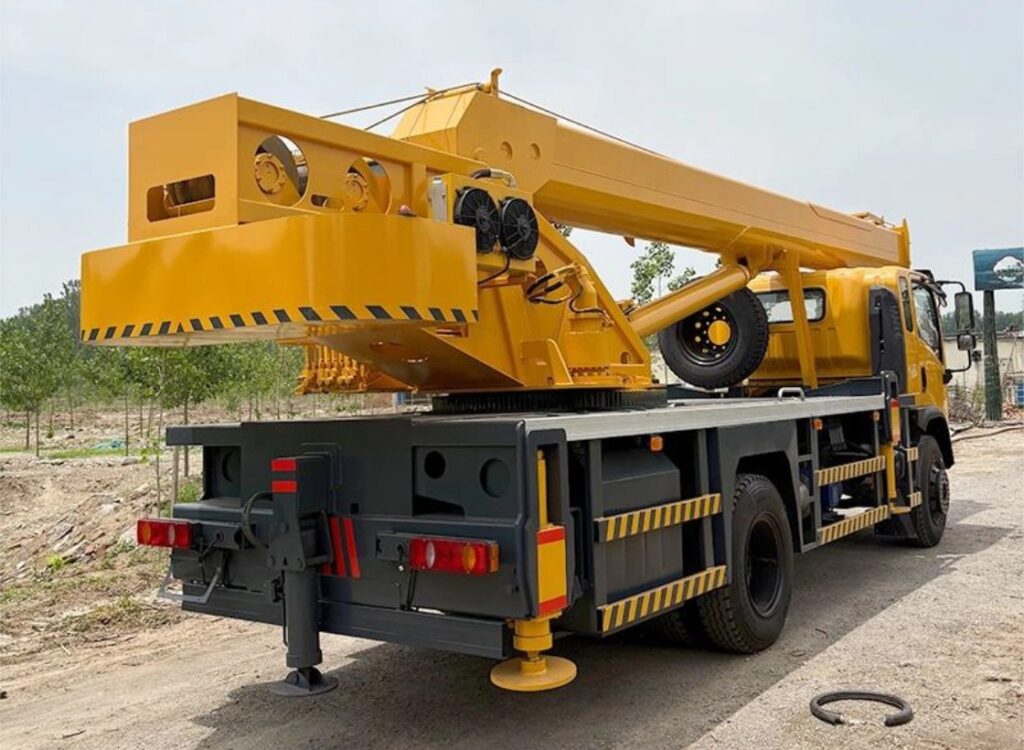
Crane
A crane is essential for lifting machinery that is too heavy for a forklift (typically over 5 tons) or too tall/wide to fit on forks.
When you need a crane:
Loading onto a flat rack or open top container from above.
Lifting a machine off a low-bed trailer without a loading dock.
Placing equipment onto foundation bolts during installation.
Electric Forklift Truck
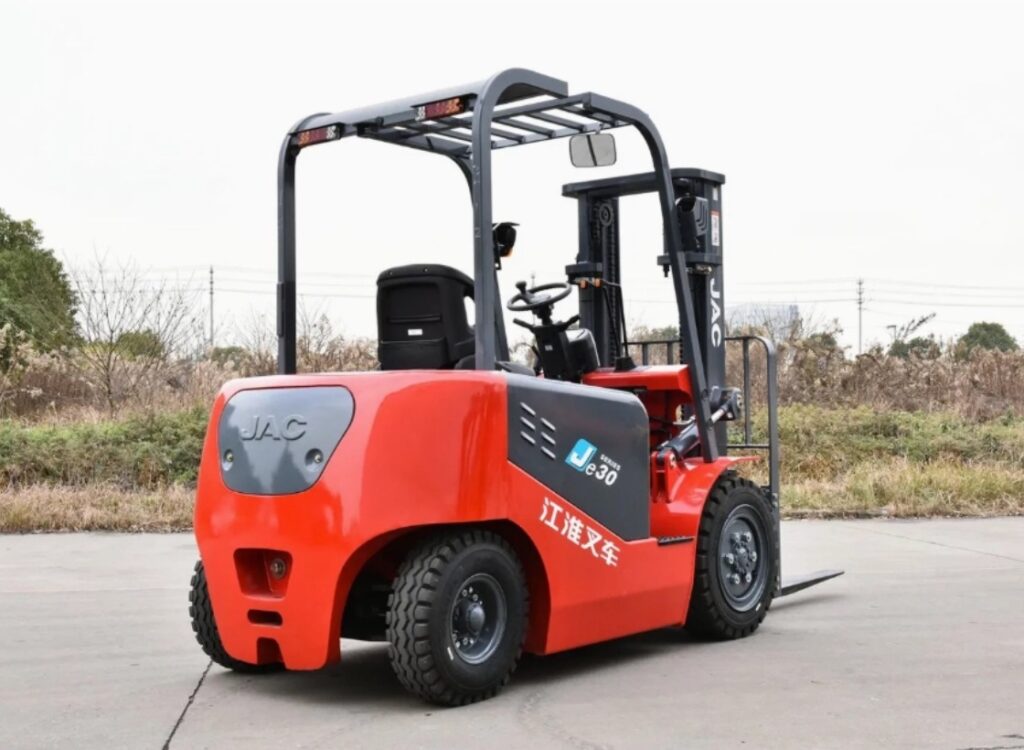
An electric forklift is the preferred tool for loading machinery into standard containers. Unlike diesel models, electric forklifts produce no fumes, making them safe to operate inside closed containers.
Why electric forklifts work best:
No carbon monoxide risk – safe inside containers and warehouses.
Smoother acceleration – reduces shock to sensitive machinery.
Lower mast height – fits easily into container openings.
5. Container Loading and Securing
Even the best packaging fails if the machine moves inside the container. In rough seas, a 5-ton machine can shift with enormous force – punching through side walls, crushing other equipment, or breaking its own base.
Proper loading and securing includes:
Weight Distribution
Place the heaviest machinery on the container floor directly above the chassis rails (not centered between rails). Keep at least 60% of the weight in the front half (door end is front for road transport). Uneven weight causes trailer instability and axle overload.
Lashing with Steel Wires
Use steel wire ropes or heavy-duty ratchet straps rated for the machine’s weight. Minimum 4-point lashing – more for tall or top-heavy equipment. Cross-lashing (left-rear to right-front and vice versa) resists sideways and forward forces.
Wooden Blocking
Hardwood blocks nailed or screwed to the container floor prevent lateral movement. Position blocks directly against the machine base or skid. Combine with steel lashing for redundancy.
Airbags (Inflatable Dunnage)
For securing multiple machines or filling gaps, inflatable dunnage bags pressurize between equipment to absorb shock and prevent contact.
Shock & Vibration Indicators
For precision machinery, attach shock-indicating labels to the crate. If they turn red during transit, you know mishandling occurred and can file a claim.
What experienced buyers do: Request loading photos and videos from the supplier or forwarder. A short video showing the machine centered, lashed, blocked, and braced gives you confidence – and evidence if something goes wrong.
6. Customs Clearance and Documentation
Customs delays are expensive. Demurrage and detention charges at port can add hundreds of dollars per day while your container sits. Most delays come from missing or incorrect documentation.
Essential documents for machinery customs clearance:
| Document | Why it matters |
|---|---|
| Commercial Invoice | Must show correct HS code, machine value, quantity, and incoterm. Discrepancies trigger inspections. |
| Packing List | Detailed weight, dimensions, and contents of each package. Customs uses this to verify no hidden goods. |
| Bill of Lading (B/L) | The cargo title. Ocean or house B/L? Telex release or original? Each affects how you take delivery. |
| Certificate of Origin | Needed for preferential tariff rates (e.g., China-ASEAN, RCEP, or EU GSP). Without it, you pay full duty. |
| Import License (if required) | Some machinery (pressurized equipment, medical devices, certain electronics) needs prior approval. |
| Insurance Certificate | Not always required by customs, but needed for claims if cargo is damaged. |
Common mistakes first-time importers make:
Using generic HS codes – the wrong code changes duty rates and may require permits.
Forgetting to list engine serial numbers or model details on the invoice.
Assuming the freight forwarder will provide all documents – some documents must come from the shipper (supplier).
Pro tip: Work with a customs broker in your destination country before the ship sails. Send them draft documents for pre-clearance. Many ports allow “entry filing” before cargo arrival, cutting release time from 5 days to 24 hours.
7. Marine Insurance for Heavy Machinery
Cargo insurance is not a luxury – it’s a necessity for heavy equipment transportation. Yet many buyers skip it to save 0.1% of the cargo value. That’s a dangerous gamble.
What marine insurance covers (All-Risk policy recommended):
Transit damage – Crushed control panels, broken castings, scratched precision surfaces.
Container accidents – Overboard containers, crane drops, truck rollovers.
Port handling risks – Forklift damage, improper lifting, crush by other cargo.
Weather-related risks – Seawater ingress, condensation damage, rainwater through torn tarps.
Theft and pilferage – Missing components or tools.
What it typically excludes (read your policy):
Inadequate packaging – if the machine was not packed for ocean freight, claim may be denied.
Inherent vice – pre-existing corrosion or manufacturing defects.
Delay or detention costs – insurance pays for physical loss, not shipping delays.
How much does it cost? Generally 0.1% to 1% of CIF value, depending on machinery type and voyage route. For a $50,000 machine, that’s $50–500. Compare that to a $15,000 repair or a total loss.
Practical advice: Many buyers think “the freight forwarder has insurance.” The forwarder’s liability is usually limited to $500 per package (under maritime law) unless you buy separate cargo insurance. Always buy your own policy or ask a broker for an open cover.
8. Delivery and Installation Planning
Many buyers think the job is done when the container arrives at the nearest port. But the most stressful part can be the last mile – and getting the machine into your building.
What you need to prepare before machinery arrives:
Factory Space and Foundation
Floor load capacity – can your slab handle a 15-ton press point load?
Foundation bolts and leveling – heavy machinery often needs bolted concrete foundations or vibration-dampening pads.
Overhead clearance – do you have enough height for the machine plus a forklift or crane?
Lifting and Moving Equipment
Forklift – what capacity? Standard 3-ton forklift won’t lift a 10-ton machine.
Crane or boom truck – for overhead unloading if no loading dock.
Rollers, skates, or air casters – for horizontal movement into tight spaces.
Power and Utilities
Electrical supply – voltage, phase, amperage. Many Chinese machines use 380V/50Hz – does your facility match? Transformers cost thousands.
Compressed air, water, exhaust – connect points ready before the machine arrives.
Installation Schedule
Who will install – supplier technician, local contractor, or your own team?
Do you need translation for manuals or on-site support?
From actual projects: We’ve seen buyers so focused on shipping that they forgot to check the doorway width. A $200,000 production line arrived – and didn’t fit through the factory door. They had to cut a new opening, adding two weeks of downtime and $8,000 in building modifications.
Plan backwards: Delivery date → customs clearance (5–10 days) → sea transit (20–40 days) → loading and documentation (1–2 weeks). Add a buffer. Then prepare your site to be ready at least one week before the earliest possible arrival.
9. Common Logistics Mistakes First-Time Buyers Make
Based on real import projects, here are the most frequent – and costly – errors:
1. Choosing the cheapest freight forwarder
Low quotes often exclude port fees, documentation charges, or container inspection costs. Or they use slow, unreliable carriers. You get what you pay for.
2. Ignoring packaging quality
Accepting supplier’s “standard export packaging” without verification. Then discovering rust or damage after a 40-day voyage.
3. No cargo insurance
“It won’t happen to me.” When it does – and it does – the loss is 100% on you.
4. Poor unloading preparation
No forklift or crane on arrival day. The container gets returned to the depot, accumulating daily demurrage while you scramble to rent equipment.
5. Missing customs documents
One missing document = one week of delay = $1,000+ in extra charges. Always use a checklist and double-check before the vessel sails.
6. Underestimating local transportation costs
Ocean freight quote looks cheap. Then you get the bill for trucking from port to your city – sometimes more than the ocean leg, especially for inland locations.
7. Forgetting about import duties and VAT
Duty rates vary from 0% to 15%+ depending on HS code. VAT (often 10–20% in many countries) is typically paid upfront and recovered later – but you need the cash flow.
8. Not confirming incoterms
Is the price EXW, FOB, CIF, or DDP? Each shifts risk and cost differently. Many disputes arise because buyer and supplier had different understandings.
Conclusion
Successful machinery imports depend on much more than choosing the right equipment.
Buyers should carefully plan:
- Transportation
- Packaging
- Container loading
- Customs clearance
- Insurance
- Installation
From what we’ve seen in many machinery projects, proper logistics planning can prevent costly delays, equipment damage, and unnecessary expenses.
For companies investing in machinery projects, proper logistics planning ensures your equipment arrives safely and your project stays on schedule. For a complete overview of planning an aluminum foil container factory from purchase to production, read our The Complete Guide to Starting an Aluminum Foil Container Manufacturing Business.
FAQ Section
Q1: What is the best shipping method for heavy machinery?
There is no single “best” method. Standard machinery under 10 tons that fits container dimensions → 20GP or 40GP container. Wide or tall equipment may need 20HQ. The right choice depends on weight, dimensions, and budget.
Q2: How much does heavy machinery shipping cost?
Costs vary widely. A 20GP container from China to US West Coast might cost $1,500–3,000 (ocean freight only).But it ships to Arifican,the cost could be up to $5,000–7,000. Always get at least three itemized quotes from freight forwarders.
Q3: Do I need cargo insurance for machinery?
Yes – strongly recommended. Marine insurance typically costs 0.3–1% of the cargo value. Without it, you bear 100% of any damage or loss during transit. Supplier or forwarder liability is minimal.
Q4: What documents are required for machinery import?
At minimum: commercial invoice, packing list, bill of lading, certificate of origin (for tariff preferences), and insurance certificate. Some machinery also needs import licenses, safety certificates, or electrical compliance documents.
Q5: How do I choose a reliable freight forwarder for machinery?
Look for forwarders with specific project cargo or industrial equipment experience. Ask for references from other machinery buyers. Check if they offer cargo insurance, customs brokerage, and door-to-door service.
Q6: Can heavy machinery be shipped in standard containers?
Yes, if dimensions and weight are within limits: max height ~2.39m (GP) or 2.69m (HQ), width ~2.35m, weight typically under 28–30 tons total container load. The machine itself must not exceed 25 tons for safe floor loading. Always confirm with your forwarder.
Q7: How can I reduce the risk of damage during shipping?
Use steel frame or heavy wooden crates, apply anti-rust treatment, require professional lashing and blocking, attach shock indicators, buy all-risk marine insurance, and request loading photos/videos for verification.
Q8: Who is responsible for loading the container?
Under EXW terms, you (or your forwarder) arrange loading at the supplier’s factory. Under FOB terms, the supplier loads onto the truck for delivery to the port. Always confirm who provides labor and equipment (forklift, crane, lashing materials) and who pays.
Q9: Do I need an electric forklift for container loading?
For loading inside containers, yes – electric forklifts are strongly preferred because they produce no carbon monoxide fumes.
Q10: What crane capacity do I need for unloading a 10-ton machine?
Minimum 15–20 ton rated crane capacity. This provides a safety margin for sling angles, dynamic loads, and uneven weight distribution. Never use a crane exactly at the machine’s weight – rigging adds extra load.