
If you plan to produce household aluminum foil rolls, one of the first decisions is where to get the raw material.
You normally do not need to manufacture aluminum foil from aluminum ingots. Instead, you can purchase aluminum foil jumbo rolls from an aluminum foil manufacturer or supplier and then convert them into smaller rolls or aluminum foil sheets for household, retail, catering, or foodservice use.
The basic process looks like this:
Aluminum Foil Jumbo Roll → Rewinding → Finished Foil Roll → Packaging
Sounds simple, right? In practice, however, choosing the wrong alloy, thickness, jumbo roll width, or supplier can create problems later.
This guide explains how to source aluminum foil jumbo rolls, what specifications to confirm, how to evaluate suppliers, and what to check before placing a bulk order.
What Is an Aluminum Foil Jumbo Roll?
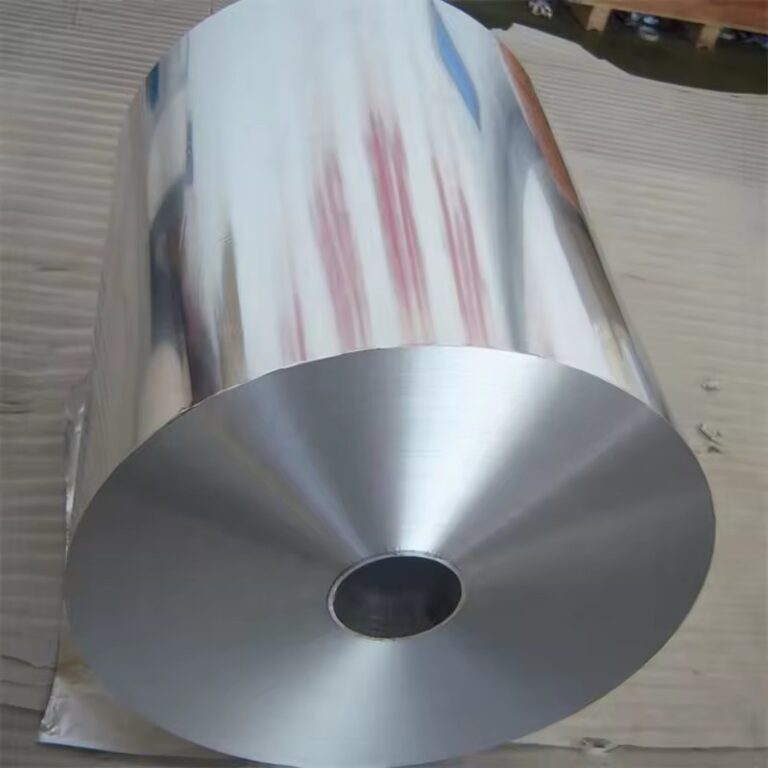
An aluminum foil jumbo roll is a large roll of aluminum foil supplied as raw material for downstream converting processes such as slitting, rewinding, and household foil roll production.
Unlike the small aluminum foil roll sold in supermarkets, a jumbo roll is designed for industrial processing.
The size and specifications of the jumbo roll depend on the converting equipment and the finished products you plan to manufacture.
This is why you should define your finished foil roll specifications before buying the raw material.
What Specifications Should You Confirm Before Buying?
Before requesting quotations, you must define your technical requirements. Suppliers cannot quote accurately without this information, and comparing quotes becomes impossible if each supplier quotes a different specification.
1. Aluminum Foil Alloy
The alloy affects the mechanical properties and processing characteristics of the foil.
Common aluminum foil alloys used in different applications include 8011, 1235, and 3003, although the appropriate alloy depends on the intended application and product requirements.
For household foil, do not simply ask a supplier for “food-grade aluminum foil” and assume that is enough information. Tell the supplier what you are producing and ask which alloy they recommend for your application.
The alloy should be confirmed together with the temper, thickness, and other material requirements.
2. Temper
Temper affects foil softness, strength, and handling characteristics.
- O Temper (Soft): Fully annealed, highly flexible. Used for household foil, pharmaceutical foil, and lamination applications
- H18/H19 (Hard): Maximum stiffness. Used for fin stock and industrial applications
- H22/H24 (Semi-Hard): Moderate stiffness. Used for container lids and some food packaging
For household foil production, O temper is most common because it provides the flexibility consumers expect
3. Foil Thickness
Thickness is one of the most important specifications. It affects product performance, material consumption, roll weight, cost, rewinding behavior, and consumer positioning.
Household foil typically ranges from 0.009 mm to 0.02 mm (9–20 microns). Common thicknesses include 9, 10, 11, 12, 13, 14, 15, 18, 20, and 24 microns.
Do not assume a single “standard” thickness applies to every market. Define the target thickness for your specific product and market before requesting quotations.
4. Jumbo Roll Width
Jumbo roll width directly affects how efficiently you can convert the material into finished rolls.
For example, if your finished products have several different widths, the jumbo roll width needs to be considered carefully to minimize unnecessary edge trim and material waste.
This is particularly important for businesses producing large quantities.
The best width is not simply the widest roll available. It should work with your finished roll dimensions and rewinding machine.
5. Jumbo Roll Diameter
The jumbo roll diameter needs to be compatible with your machine’s unwinding system.Most jumbo rolls have an outer diameter up to 800 mm
Before ordering, confirm:
- Maximum jumbo roll diameter
- Minimum jumbo roll diameter
- Roll weight
- Core size
A supplier may be able to produce the required foil specification but still not be suitable for your particular machine if the roll dimensions are incompatible.
6. Core Diameter
The inner core diameter must be confirmed because it affects machine compatibility and material handling. Standard core diameters include 76 mm and 152 mm. Confirm what your equipment accepts before ordering.
Where Can You Source Aluminum Foil Jumbo Rolls?
There are four common ways to find aluminum foil jumbo roll suppliers:
1. B2B Platforms
You can search for suppliers on Alibaba, Made-in-China, Global Sources, or 1688. This is a convenient way to compare different suppliers and prices. Always check samples and product specifications before ordering.
2. Trade Shows
Aluminum and packaging trade shows are a good place to meet manufacturers directly. You can see their products, discuss your requirements, and build long-term supplier relationships.
3. Equipment Manufacturer Recommendations
If you are buying an aluminum foil rewinding or slitting machine, you can ask the equipment supplier to recommend suitable aluminum foil suppliers. They may already work with reliable raw material manufacturers.
4. Industry Sourcing Agent
A sourcing agent with experience in aluminum foil can help you find suppliers, compare prices, check samples, verify factories, and arrange quality inspection. This can be especially helpful for overseas buyers sourcing from China.
How Do You Choose a Reliable Aluminum Foil Jumbo Roll Supplier?
Once you have a list of potential suppliers, do not immediately choose the cheapest quotation.
Instead, evaluate them systematically.
1. Check Manufacturing Capability
Ask:
Are they a manufacturer or trader?
What products do they produce?
What alloys and thicknesses can they supply?
What is their normal MOQ?
2. Check Product Experience
Prefer suppliers with experience supplying aluminum foil jumbo rolls for household foil, food packaging, catering, foodservice, or other converting applications.
3. Check Quality Control
Ask about incoming material inspection, thickness inspection, surface inspection, roll inspection, packaging inspection, and final quality control. Good suppliers can provide test reports for each coil.
4. Check Production Consistency
A supplier may produce a good sample but still need to prove batch-to-batch consistency. This is particularly important for repeat buyers.
5. Check Export Experience
Check whether the supplier has experience exporting to your target country. Export experience alone does not guarantee reliability, but it reduces logistical risks.
How to Compare Aluminum Foil Jumbo Roll Quotations?
Do not compare suppliers based only on price per ton. Compare the full specification:
| Factor | What to Check |
|---|---|
| Alloy | 8011, 1235, 3003, etc. |
| Temper | O, H18, H22, etc. |
| Thickness | Actual gauge and tolerance |
| Width | Match your machine capability |
| Core diameter | 76 mm, 152 mm, etc. |
| Jumbo roll weight | kg per roll |
| Tolerance | Thickness, width |
| Surface quality | Brightness, oil residue, pinholes |
| Packaging | Export-grade seaworthy packaging |
| MOQ | Minimum order quantity |
| Lead time | Production and shipping time |
| Payment terms | T/T, L/C, etc. |
| Incoterms | FOB, CIF, etc. |
Two quotations with different specifications are not directly comparable. A low price is only useful if the specification is actually comparable
What Affects Aluminum Foil Jumbo Roll Price?
Several factors influence aluminum foil jumbo roll price:
- Aluminum market price: LME aluminum prices fluctuate. In July 2026, average LME aluminum was approximately $3,150 per tonne.
- Alloy: Different alloys have different costs.
- Thickness: Thinner foils require more rolling passes and tighter tolerances.
- Width: Wider rolls may have different cost structures.
- Order quantity: Larger orders typically achieve better per-ton pricing.
- Surface requirements: Bright finish, coating, or special surface treatments add cost.
- Packaging: Export-grade packaging adds cost.
- Freight and Incoterms: Shipping costs vary by destination.
- Exchange rates: Currency fluctuations affect final price.
Industrial aluminum foil jumbo roll prices typically range from $2,500 to $4,800 per ton FOB, depending on specifications and market conditions. Prices change with the underlying aluminum market, so always request current quotations.
How to Source Aluminum Foil Jumbo Rolls from China?
China is a major source of aluminum foil jumbo rolls. Here is a practical process.
Step 1 – Define Your Specifications
Prepare a complete specification sheet:
Alloy
Temper
Thickness
Width
Core diameter
Roll diameter
Target quantity
Application
Step 2 – Shortlist Suppliers
Contact several suppliers rather than relying on one quotation.
Step 3 – Request Samples
Test the actual material before committing to a large order.
Step 4 – Compare Quotations
Compare on an equivalent specification basis. A low price is only useful if the specification is actually comparable.
Step 5 – Confirm Production Details
Confirm production lead time, packaging, loading quantity, inspection terms, payment terms, and shipping terms.
Step 6 – Pre-Shipment Inspection
If the order value justifies it, arrange an inspection before shipment.
Step 7 – Shipping
Discuss container loading, weight, port, Incoterms, and freight.
How Much Aluminum Foil Should You Buy?
The right purchasing quantity depends on your production plan.
A simple way to think about it is:
Required Jumbo Roll Quantity ≈ Finished Product Material Requirement + Production Loss + Safety Stock
However, production loss is not a universal fixed percentage.
It depends on factors such as:
- Finished roll width
- Jumbo roll width
- Rewinding process
- Production efficiency
If you are producing several household foil sizes, calculate the material requirement for each product instead of applying one general percentage to the entire project.
For a new business, buying too much inventory can also tie up working capital. Your MOQ, expected monthly consumption, shipping cost, and supplier lead time should all be considered.
Common Mistakes When Sourcing Aluminum Foil Jumbo Rolls
1. Buying Based Only on Price
The cheapest supplier may not be offering the same material.
Always compare equivalent specifications.
2. Not Confirming Alloy and Temper
Different materials can behave differently during converting.
Confirm the alloy and temper before placing the order.
3. Ignoring Jumbo Roll Dimensions
A roll that cannot be properly loaded onto your machine is not a good deal, regardless of its price.
4. Skipping Sample Testing
A small trial order can identify potential problems before you commit to a large quantity.
5. Ignoring Packaging
The jumbo roll needs to survive transportation, handling, and storage.
Ask the supplier how the rolls will be protected during shipping.
6. Ordering Too Much Too Early
For a new household foil project, inventory needs to be balanced against MOQ, cash flow, production demand, and shipping costs.
Practical Buyer Checklist
Before placing an order, confirm:
☐ Alloy (e.g., 8011, 1235, 3003)
☐ Temper (e.g., O, H18)
☐ Thickness (mm or micron)
☐ Width (mm)
☐ Core diameter (mm)
☐ Jumbo roll diameter (mm)
☐ Roll weight (kg)
☐ Quantity (tons or rolls)
☐ Surface requirements (one side bright, two sides bright, etc.)
☐ Quality standard (tolerances, pinhole limits)
☐ COA/material documents
☐ Packaging (export-grade seaworthy)
☐ Lead time (days)
☐ Incoterms (FOB, CIF, etc.)
☐ Inspection requirements (pre-shipm
Conclusion
Successful sourcing of aluminum foil jumbo rolls starts with clear specifications, not simply finding the lowest quotation. Define your alloy, temper, thickness, width, core diameter, and quality requirements before contacting suppliers. Compare quotations on an equivalent basis. Request samples. Test quality. Confirm all terms before placing an order.
The key steps are:
Define Specifications → Find Suppliers → Request Samples → Compare Quotes → Test Quality → Confirm Terms → Inspect → Ship.
If you are sourcing aluminum foil jumbo rolls for household foil production and are not sure which specifications or suppliers are suitable, you can provide your target foil thickness, alloy, jumbo roll size, quantity, and destination market. A sourcing partner can help compare suppliers, verify specifications, arrange samples, and coordinate inspection before shipment.
FAQ Section
What is an aluminum foil jumbo roll?
An aluminum foil jumbo roll is a large roll of aluminum foil used as raw material for downstream processes such as slitting, rewinding, and household foil production.
What aluminum foil is commonly used for household foil?
Several aluminum foil alloys can be used for different applications. The appropriate alloy depends on the required properties, thickness, temper, and target application. Buyers should confirm the specification with their supplier rather than assuming one alloy is suitable for every household foil product.
How do I choose the right aluminum foil thickness?
Start with the finished household foil product you want to sell. Define the required performance, market positioning, roll length, and production process, then select the appropriate thickness with your raw material supplier.
How can I find an aluminum foil jumbo roll supplier in China?
You can search through B2B platforms, industry directories, trade shows, or direct manufacturer sourcing. Shortlist several suppliers and verify their specifications, samples, production capability, and export experience before placing an order.
How much does an aluminum foil jumbo roll cost?
There is no fixed price. Cost depends on aluminum market conditions, alloy, temper, thickness, width, quantity, processing requirements, packaging, and delivery terms.
Should I buy directly from a factory or a trading company?
It depends on your order volume and requirements. Direct factories can be useful for larger, repeat orders, while experienced trading companies may offer more flexibility for smaller or mixed requirements.
Should I test aluminum foil jumbo rolls before placing a bulk order?
Yes. Sample testing or a trial order can help confirm material quality and machine compatibility before you commit to a large purchase.
What information should I send to an aluminum foil supplier?
At minimum, provide the alloy, temper, thickness, jumbo roll width, core diameter, roll diameter, quantity, application, destination market, and any specific quality requirements.