
The demand for aluminum foil containers has increased rapidly in recent years due to the growth of takeaway food, catering services, airline meals, bakery products, and ready-to-eat food markets. Compared with traditional plastic packaging, aluminum foil containers offer excellent heat resistance, recyclability, hygiene performance, and convenience.
For manufacturers entering the food packaging industry, investing in the right production equipment is one of the most important decisions. A full automatic aluminum foil container machine can help businesses achieve higher production capacity, stable product quality, and lower labor dependency compared with manual or semi-automatic solutions.
However, choosing an aluminum foil container machine is not only about purchasing equipment. Buyers need to understand machine structure, technical parameters, production processes, mold requirements, and the relationship between machine specifications and final products.
This guide explains everything you need to know before investing in an automatic aluminum foil container manufacturing machine, including how the machine works, key components, technical parameters, suitable products, and important factors when requesting a quotation from manufacturers.
What Is a Full Automatic Aluminum Foil Container Making Machine?
A full automatic aluminum foil container making machine is a high-speed production system designed to convert aluminum foil jumbo rolls into finished food containers automatically.
A complete automatic aluminum foil container production line usually includes:
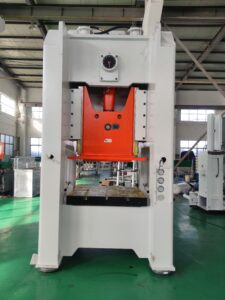
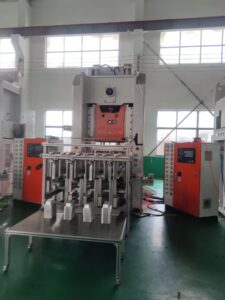
Punching Press Equipment
The punching press is the core component of the aluminum foil container machine.During production, the press drives the upper mold downward with controlled force, forming the aluminum foil into the required container shape.
The press system determines:
- Production capacity
- Product range
- Machine stability
Common machine tonnage includes:45 ton,63 ton,80 ton and 130 ton.
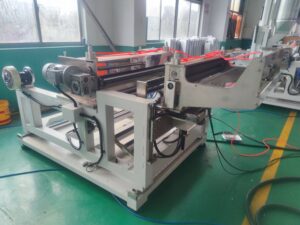
Decoiler/Feeder Equipment
The feeding system is responsible for transferring aluminum foil material from the jumbo roll into the punching area accurately.
The feeding system directly affects:
- Product size accuracy
- Material utilization
- Production stability
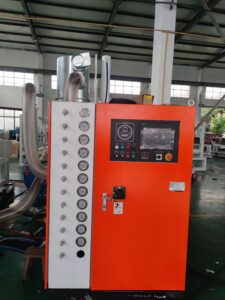
Control Cabinet
The electrical control cabinet is the “brain” of a full automatic aluminum foil container making machine. A stable control system ensures smooth operation, accurate positioning, and safe production.
Modern automatic aluminum foil container machines usually use PLC-based control technology combined with a touch screen interface. Operators can easily adjust production parameters, monitor machine status, and identify possible problems during operation.
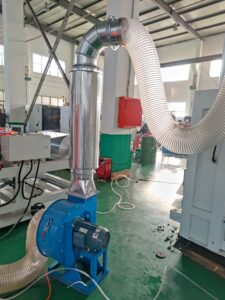
Scrap Aspirator
During the punching and stamping process, excess aluminum foil around the finished containers becomes edge scrap. A scrap aspirator is designed to automatically remove this scrap from the mold area using powerful suction, ensuring a clean and continuous production process.
Without proper scrap removal, leftover foil can accumulate around the mold, increasing the risk of production interruptions, product defects, or even mold damage.
Modern scrap aspirators are designed to operate continuously alongside the press machine, transporting scrap through pipelines to a scrap baler unit or a mesh bag without affecting production speed.
Stacking equipment(Optional)
A full automatic aluminum foil container making machine is a high-speed production system designed to convert aluminum foil jumbo rolls into finished food containers automatically.
A complete automatic aluminum foil container production line usually includes:
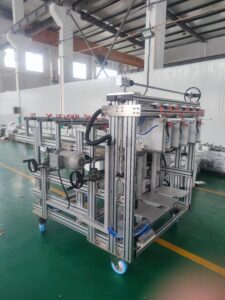
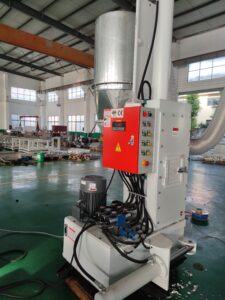
Scrap Baler(Optional)
After the aluminum foil scrap is collected by the scrap aspirator, it is transferred to a scrap baler system for compression.
The scrap baler compresses loose aluminum foil waste into compact square block, making storage, handling, and transportation much easier. Since aluminum foil scrap retains recycling value, proper collection and baling can help manufacturers recover part of their raw material costs.
Instead of storing large volumes of loose scrap, compressed aluminum bales require significantly less storage space and are easier to sell to recycling companies.
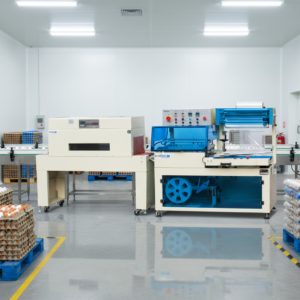
Shrink Wrap Machine(Optional)
After the finished aluminum foil containers are counted and stacked, they can be transferred directly to an automatic shrink wrap machine for retail packaging.
The shrink wrap machine automatically groups a preset quantity of containers—such as 5, 10, 20, 25, or 50 pieces—and seals them with heat-shrink film to create neat, secure, and retail-ready packages.
This packaging method protects the products from dust, moisture, and contamination during transportation and storage while improving their appearance on store shelves or online marketplaces.
C-Frame vs H-Frame Machine Structure
C-Frame Press
Advantages:
- Lower investment cost
- Compact design
- Suitable for standard production
Suitable for:
- Small and medium container sizes
- Medium production capacity
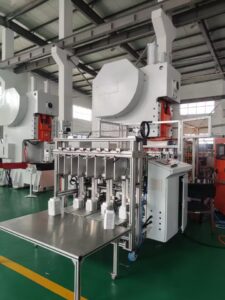
H-Frame Press
Advantages:
- Higher structural strength
- Better stability
- Lower vibration during high-speed operation
- Longer machine lifespan
Suitable for:
- Large production factories
- Continuous 24-hour production
- Heavy molds and larger containers
Technical Parameters You Should Understand Before Buying
When purchasing a full automatic aluminum foil container making machine, many buyers focus only on machine price. However, technical parameters are more important because they determine whether the machine can produce your target products efficiently.
| Parameter | Typical Range | Why It Matters |
|---|---|---|
| Machine Structure | C-frame / H-frame | Determines stability and durability |
| Press Force | 45-63-80-130 Tons | Affects product size range |
| Production Speed | 40-60 strokes/min | Determines output capacity |
| Feeding Accuracy | ±0.1-0.5mm | Influences product consistency |
| Aluminum Thickness | 0.028-0.12mm | Determines material compatibility |
| Mold Type | 2-3-4-5 cavity | Affects production efficiency |
| Motor Power | Depends on machine model | Influences energy consumption |
| Air Pressure Requirement | Usually 0.5-0.8 MPa | Required for operation |
| Control System | PLC + Touch Screen | Ensures easy operation |
What Products Can Be Made by Full Automatic Aluminum Foil Container Machines?
One of the biggest advantages of a full automatic aluminum foil container making machine is its flexibility. By changing molds, the same production system can manufacture different types of aluminum foil containers for various industries.
The final product range depends on:
- Machine tonnage
- Mold design
- Aluminum foil thickness
- Container size
- Production requirements
Below are some common applications.
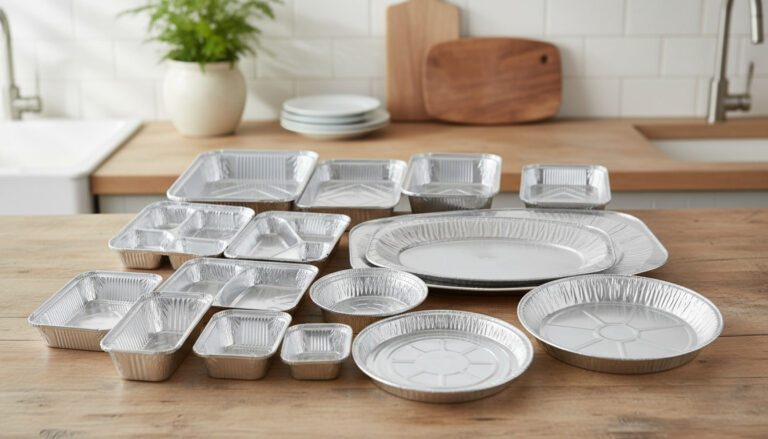
Customized Aluminum Foil Containers
Customized aluminum foil containers are one of the most popular applications for automatic production lines, especially for customers who want to develop their own packaging brands or serve specific industries.
Instead of producing standard containers only, manufacturers can customize products based on the requirements of their target markets.
Aluminum Foil Lids
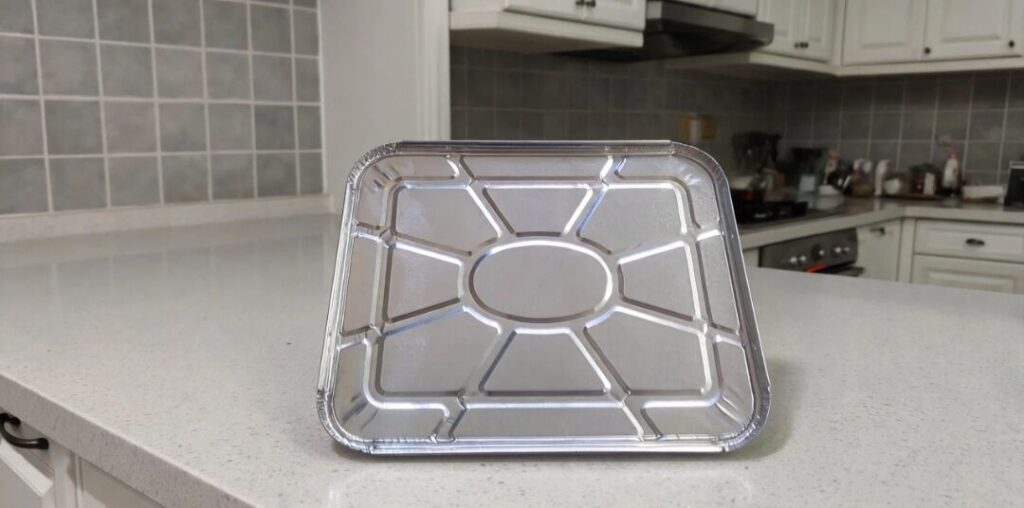
Besides producing aluminum foil containers, a complete packaging solution can also include customized aluminum foil lids.
Aluminum foil lids are widely used together with food containers to provide:
- Sealing protection
- Product freshness
- Better hygiene
For food manufacturers and retailers, matching containers with customized foil lids creates a complete packaging solution.
Airline and Catering Food Trays
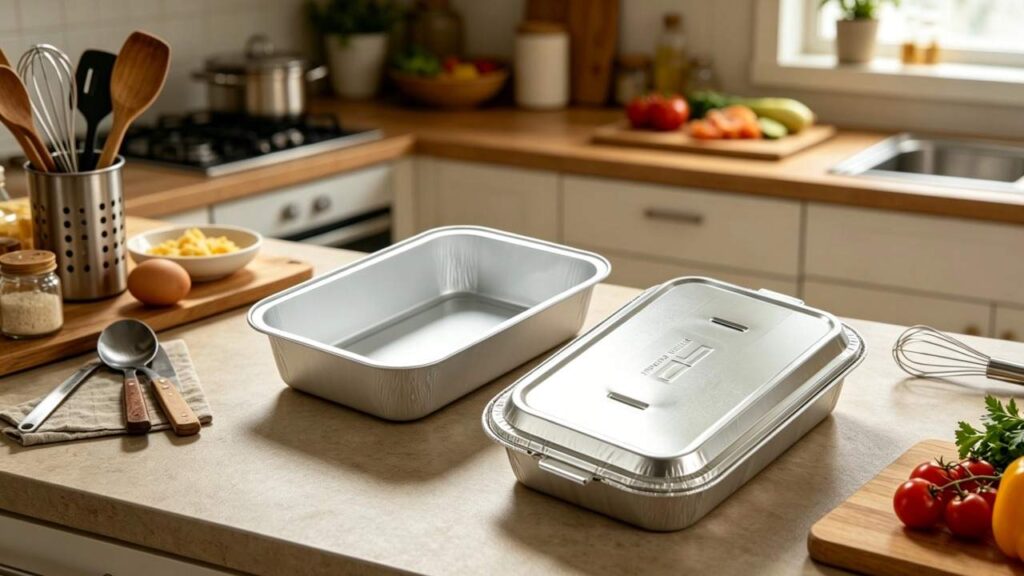
Airline and catering food trays are one of the most demanding applications for aluminum foil container manufacturing.
Aluminum foil trays are widely used by:
- Airlines
- Airport catering companies
- Hotels
- Large-scale catering suppliers
- Meal preparation companies
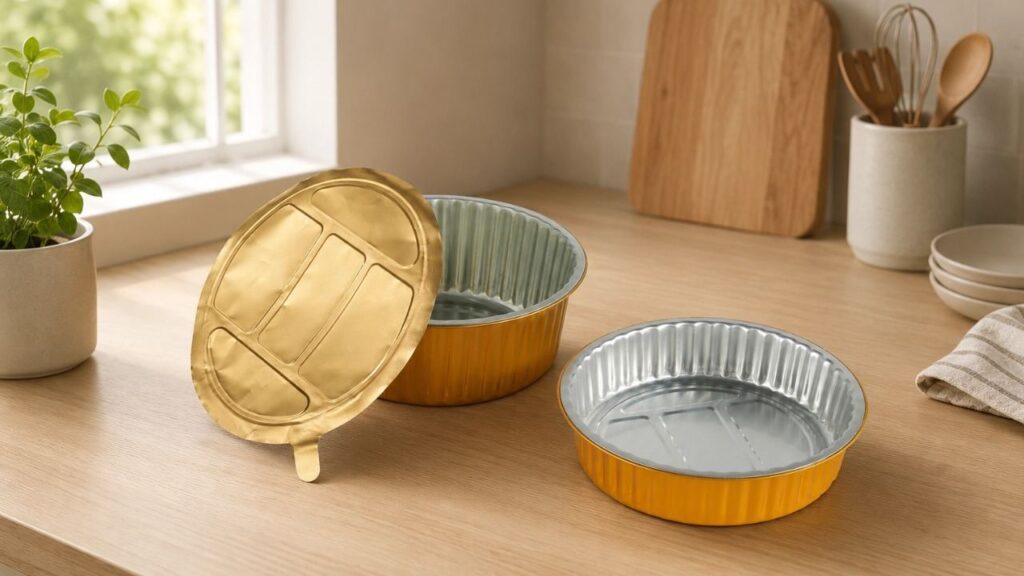
Wrinke Free Containers
Wrinkle-free aluminum foil containers represent a higher-end segment of the market.
Compared with traditional aluminum foil containers, wrinkle-free containers have a smoother surface appearance and more premium visual quality.
They are commonly used for:
- Premium ready meals
- Bakery products
- Brand-focused retail products
How to Choose the Right Aluminum Foil Container Machine Manufacturer?
Choosing the right supplier is as important as choosing the machine itself.
A reliable manufacturer should provide not only equipment but also technical support throughout the project.
1. Check Manufacturing Experience
Experience matters because aluminum foil container production requires knowledge of:
- Machine adjustment
- Mold design
- Material characteristics
- Production optimization
A supplier with real installation experience can help avoid many problems during startup.
2. Review Previous Customer Projects
Before ordering, ask suppliers for:
- Factory installation photos
- Customer references
- Production videos
- Product samples
Real production cases are more valuable than only looking at machine specifications.
3. Confirm Technical Support
Important questions include:
- Does the supplier provide installation?
- Is remote support available?
- Are spare parts available?
- How long is the warranty period?
Good after-sales service reduces production downtime.
4. Test Production Samples before delivery
Before shipping, it is recommended to confirm:
- Container samples
- Material specifications
- Production speed
A professional supplier should be able to test product samples before delivery.
5. Consider Complete Project Capability
For new investors, buying only a machine may not be enough.
A complete aluminum foil container project may require support with:
- Machine selection
- Mold design
- Raw material sourcing
- Factory layout
- Production training
Working with a supplier who understands the complete manufacturing process can reduce investment risks.
Conclusion
The growing demand for disposable food packaging has created new opportunities for aluminum foil container manufacturers worldwide.
A full automatic aluminum foil container making machine allows businesses to produce high-quality containers with higher efficiency, lower labor costs, and better production consistency.
However, successful production depends on choosing the correct combination of:
Machine + Mold + Raw Material + Manufacturing Experience
Before making an investment decision, buyers should carefully evaluate:
- Product requirements
- Machine specifications
- Supplier experience
- After-sales support
- Long-term production goals
For investors entering the aluminum foil packaging industry, selecting the right equipment partner can significantly reduce startup risks and improve future profitability.
To learn more about starting an aluminum foil container manufacturing business, read our complete guide:
The Complete Guide to Starting an Aluminum Foil Container Manufacturing Business.
FAQ Section
Q1: What is the production capacity of a fully automatic aluminum foil container machine?
Production capacity depends on the machine’s stroke speed and cavities. A typical machine running at 50 strokes per minute with a four-cavity mold produces 200 containers per minute.
Q2: What aluminum foil thickness can the machine process?
Most standard machines process foil thicknesses from 0.028mm to 0.10mm. Thicker foils (0.10mm to 0.20mm) require hydraulic presses with higher tonnage. Always confirm the thickness range with your supplier based on your specific container requirements.
Q3: How many workers are needed to operate the machine?
A fully automatic machine typically requires only one operator to monitor production and collect finished stacks. At higher volumes with two-shift operation, two workers may be needed—far fewer than the six workers required for semi-automatic production at the same volume.
Q4: Can the machine produce different container sizes?
Yes, but changing container sizes requires changing the mold. each container size and shape requires its own dedicated mold. Multi-cavity molds produce identical containers simultaneously—they cannot produce different sizes in the same stroke.
Q5: How long does installation and commissioning take?
Installation typically takes 1-2 weeks depending on the complexity of the machine and the readiness of your factory. Commissioning and training add additional time. Suppliers should provide a clear timeline before purchase.
Q6: Are there any auxiliary equipment needed?
Air compressor and Forklift are needed.
Air compressor provides air source,while forklift can change the mould and foil material.
Air compressor specs:7kw,considering you will add more machine,we suggest 15kw,
maximum pressure should be not less than 0.8Mpa.Air consumption 1.4 cbm/min.
Forklift specs:Capacity undertaken 2 Ton 1.2 meters lifting.