
Aluminum foil jumbo rolls are widely used materials in the food packaging industry. It is commonly used to produce aluminum foil containers, household foil rolls, foil sheets, dairy lids, hair foil, and many other aluminum foil packaging products.
Although aluminum foil has excellent corrosion resistance, improper storage can still cause quality issues. Common problems include white spots, surface oxidation, water stains, and discoloration. These defects may affect product appearance, forming performance, and customer satisfaction.
From what we’ve seen in many foil container factories, proper aluminum foil storage is just as important as purchasing high-quality raw materials. In many cases, quality problems begin in the warehouse rather than during production.
This article explains how to store aluminum foil rolls correctly, how long they can be stored, and how to prevent oxidation and white spots.
Content Topic
- What Causes White Spots and Oxidation on Aluminum Foil?
- How to Store Aluminum Foil Rolls Properly?
- Understanding Aluminum Foil Shelf Life
- What to Do When Aluminum Foil Arrives at Your Factory?
- Common Storage Mistakes in Foil Container Factories
- Best Practices for Warehouse Management
- Frequently Asked Questions
What Causes White Spots and Oxidation on Aluminum Foil?
Before we talk about solutions, it helps to understand what you’re actually seeing. Those white spots, cloudy patches, or powdery deposits on aluminum foil aren’t random. They’re the visible result of chemical reactions between the foil surface and its environment.
White spots are usually caused by moisture-driven oxidation. When water vapor condenses on the foil surface, it creates localized galvanic cells. The aluminum reacts with water to form aluminum hydroxide and aluminum oxide, which appear as white or grayish spots. Over time, this can lead to pitting corrosion – permanent damage that ruins the foil’s appearance and mechanical integrity.
Here are the most common triggers we see in actual production environments:
High humidity – Warehouse humidity above 70% RH accelerates moisture absorption.
Water condensation – Happens when cold foil rolls are moved into a warm, humid area.
Temperature fluctuations – Night-to-day swings cause condensation on metal surfaces.
Poor ventilation – Stagnant air traps moisture around stored rolls.
Damaged packaging – Tears or punctures in the protective wrap expose the foil directly to ambient air.
Direct floor contact – Concrete floors release moisture that rises into the bottom layers of foil rolls.
Chemical exposure – Acids, alkalis, or even certain cleaning agents can react with the foil.
Many people assume white spots originate from the supplier. But we’ve tested countless “defective” rolls that were perfectly fine upon delivery. The problem developed weeks later because the foil sat near an open loading dock or on a damp concrete floor. Good aluminum foil raw material quality is only half the battle – the other half is how you treat it after it arrives.
How to Store Aluminum Foil Rolls Properly?
Recommended Storage Conditions
Control these four variables to keep foil production-ready:
- Temperature: 15°C–30°C (59°F–86°F)
Avoid large swings at all costs. A warehouse that drops to 10°C at night and jumps to 28°C during the day becomes a condensation machine. From what we’ve seen, sudden temperature changes cause more white spots than high humidity alone.
- Humidity: Below 70% RH(Relative Humidity)– lower is better
At 70% RH or above, oxidation risk rises sharply. For storage over six months, aim for 40–50% RH. In naturally humid regions, use dehumidifiers or air conditioning. We’ve walked into factories where the humidity monitor read 85% – and every roll had white spots.
- Ventilation
Good airflow prevents localized moisture pockets. Use ceiling fans, wall vents, or HVAC(Heating, Ventilation, and Air Conditioning). But don’t blow air directly onto exposed foil – rapid evaporation can create temperature gradients.
- Clean Environment
Keep foil away from chemicals, acids, alkalis, solvents, and even household cleaners. Store foil in a dedicated zone – not near batteries, fertilizers, or cleaning supplies. One factory stored caustic floor cleaners just a few meters from their foil pallets; within two months, every roll showed severe corrosion at the edges.
Keep Original Packaging Intact
Do not remove the factory protective wrapping until you are ready to load the foil onto your aluminum foil press machine. That plastic or paper wrapping is specifically designed to keep moisture out and preserve the foil surface. Every day the foil sits exposed, it’s absorbing humidity. Once opened, the clock starts ticking.
Store Rolls on Pallets – Never on the Floor
Direct floor contact is one of the most common and costly mistakes. Concrete floors are porous and constantly release moisture from the ground below. Place every roll on wooden pallets, plastic pallets, or metal racks. The pallet creates an air gap that prevents moisture wicking and allows air to circulate underneath.
Keep Distance from Walls
Leave at least 10–15 cm (4–6 inches) between foil rolls and warehouse walls. Walls, especially exterior walls, can be cold and prone to condensation. That gap improves air circulation and reduces the risk of moisture forming on the rolls closest to the wall.
Avoid Outdoor Storage – Completely
Never store aluminum foil rolls outdoors, even under a tarp. Rain, dew, direct sunlight, and daily temperature swings will cause rapid degradation. We’ve seen rolls left outside for just one weekend develop visible white spots by Monday morning. Outdoor storage should be an absolute last resort, and even then, only for a few hours.
Position Rolls Correctly
Store jumbo rolls with the axis horizontal (as they would sit on an unwinder). Avoid stacking rolls in a way that puts pressure on the edges, as deformed edges can lead to tracking problems during conversion. If you must stack, use proper pallet racks and limit stack height based on roll weight and packaging strength.
Separate by Alloy and Temper
If you handle multiple aluminum alloys (e.g., 3003, 8011, 3105) or different tempers, store them separately with clear labeling. This prevents mix-ups and ensures you don’t accidentally use the wrong material for a specific container order.
Understanding Aluminum Foil Shelf Life
One of the most common questions we hear is, “How long can we keep aluminum foil rolls before they go bad?”
Under proper storage conditions (temperature and humidity controlled, packaging intact, on pallets), aluminum foil rolls typically have a usable shelf life of 12 to 24 months. However, this depends on several factors:
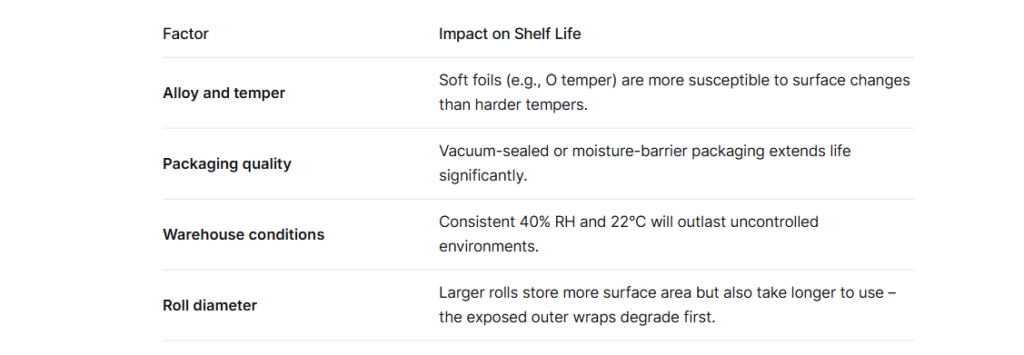
In practice, we recommend using the FIFO (First In, First Out) principle. Rotate your inventory so that older rolls are used before newer deliveries. Even under ideal conditions, aluminum foil is not a “store forever” material. After 18–24 months, you may start seeing minor surface dullness or increased breakage rates during forming.
For aluminum foil shelf life tracking, label every pallet with the delivery date and alloy. Some factories go further and add a “use by” date based on their warehouse conditions. That’s a smart practice.
What to Do When Aluminum Foil Arrives at Your Factory?
The moment foil rolls arrive at your loading dock, your storage management begins. Don’t wait until the end of the day to move material inside. Follow this receiving checklist:
1. Inspect Packaging Condition
Check every roll for tears, holes, water stains, or crushed areas. If the protective wrap is damaged, note it on the delivery receipt and take photos. A small puncture today can lead to white spots around that area within weeks.
2. Check Surface Condition (Spot Inspection)
Unwrap one roll from the delivery and visually inspect the first few meters for white spots, corrosion, scratches, or oil stains. This establishes a baseline. If you find defects, quarantine the affected rolls and contact your supplier immediately.
3. Move to Controlled Storage Immediately
Never leave foil rolls sitting on the loading dock, even for “just an hour.” We’ve seen afternoon rain blow in and soak half a pallet. Move all rolls into your temperature- and humidity-controlled warehouse right after unloading.
4. Log Inventory with FIFO Tags
Apply a receiving label with date, alloy, temper, roll weight, and pallet location. If your warehouse management system supports it, scan barcodes to track storage duration.
5. Quarantine and Test if Needed
If you’re storing foil for more than six months, pull a small sample after three months to check for surface changes. Better to discover a slow oxidation trend early than to open 20 rolls of ruined material when you need to run a large order.
Common Storage Mistakes in Foil Container Factories
After visiting dozens of foil container production facilities, we’ve seen the same storage mistakes repeat over and over. Avoid these at all costs.
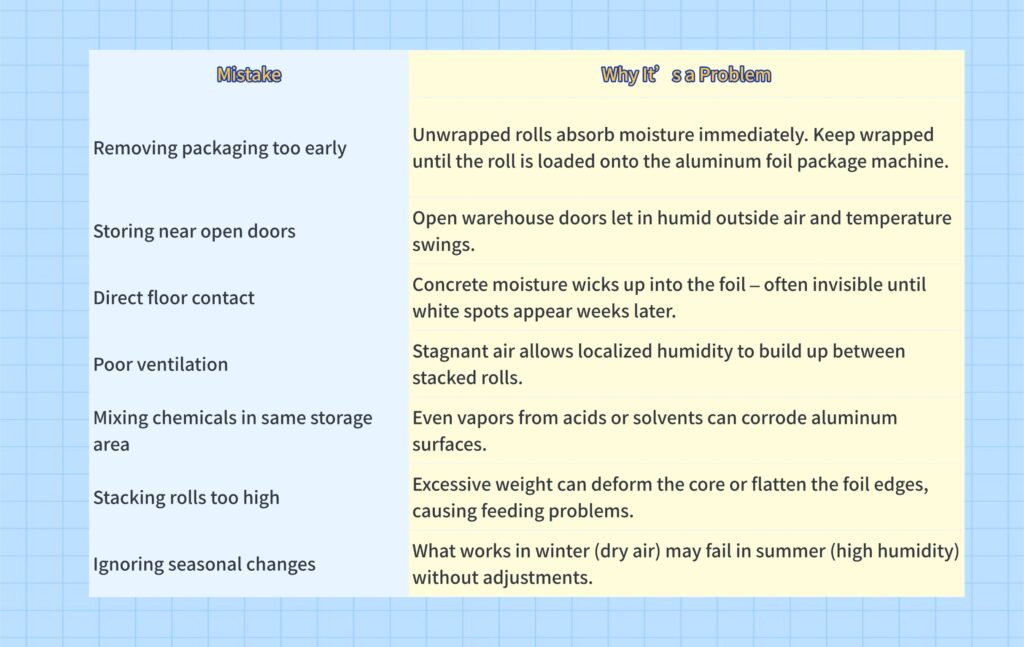
One factory we consulted had stored 200 rolls of 8011 foil directly on a concrete floor for four months. Every single roll had heavy white spots on the bottom 3–5 wraps. They lost over $15,000 in material because nobody thought to use pallets.
Best Practices for Warehouse Management
Successful foil container factories don’t leave storage to chance. They implement systems that protect their aluminum foil rolls day after day. Here’s what works.
Install Humidity Monitoring
Place hygrometers (humidity sensors) in multiple zones of your foil storage area. Check them daily. If humidity exceeds 70%, run dehumidifiers or improve ventilation. Some larger facilities use continuous data loggers that alert staff when conditions drift out of range.
Implement FIFO Inventory System
Organize your pallet racks so that older stock is always in front or on lower levels. Use visual indicators (colored tags or date stickers) to make FIFO obvious to forklift operators. Without a system, operators will always grab the easiest pallet – which tends to be the newest one.
Conduct Regular Warehouse Inspections
Walk through your foil storage area weekly. Look for:
Tears or damage to packaging
Water stains on floors or walls
Condensation on metal surfaces (including racks and beams)
Signs of rodents or insects (they can chew through packaging)
Obstructed air vents
Train Forklift Operators and Warehouse Staff
One poorly trained operator can ruin weeks of careful storage by leaving a roll outside for an hour or puncturing packaging with fork tines. Include aluminum foil handling and storage protocols in your onboarding and annual refresher training.
Keep a Clean, Dry Floor
Even with pallets, a constantly wet or dusty floor contributes to overall humidity. Sweep and mop regularly. Address roof leaks and wall seepage immediately.
Use Dedicated Foil Storage Zones
Separate foil from steel coils, cardboard, chemicals, and maintenance supplies. A dedicated zone is easier to control and monitor.
Proper aluminum foil warehouse management doesn’t require expensive automation – just consistent attention to basic principles. The factories that do this well consistently report lower scrap rates and fewer customer returns.
Conclusion
Aluminum foil quality depends not only on manufacturing but also on storage conditions.
To prevent oxidation and white spots, manufacturers should:
- Control warehouse humidity
- Avoid condensation
- Keep original packaging intact
- Store rolls on pallets
- Follow FIFO inventory principles
- Maintain good ventilation
With proper aluminum foil storage, manufacturers can extend shelf life, reduce material waste, and maintain stable production quality.
For a complete framework covering all these interconnected topics, refer to our Aluminum Foil Raw Materials: The Complete Guide for Packaging Manufacturers and Buyers.
FAQ
What causes white spots on aluminum foil?
White spots are usually caused by moisture and oxidation reactions on the foil surface, often due to high humidity or condensation.
Can aluminum foil oxidize during storage?
Yes. Although aluminum foil is corrosion-resistant, improper storage conditions can lead to oxidation over time.
What is the shelf life of aluminum foil rolls?
Under proper storage conditions, aluminum foil rolls can typically be stored for 12–24 months.
What humidity level is recommended for aluminum foil storage?
A relative humidity below 70% is generally recommended.
Should aluminum foil rolls be stored on pallets?
Yes. Pallets help prevent moisture transfer from the floor and improve airflow around the material.
Can aluminum foil be stored outdoors?
No. Outdoor storage increases exposure to moisture, sunlight, and temperature fluctuations.
How can I prevent condensation on aluminum foil?
Maintain stable temperatures, control humidity, and avoid moving cold materials into warm environments without acclimatization.
What should I inspect when receiving aluminum foil rolls?
Check packaging condition, surface quality, signs of water damage, and overall material appearance before storage.
Share:
Related Posts
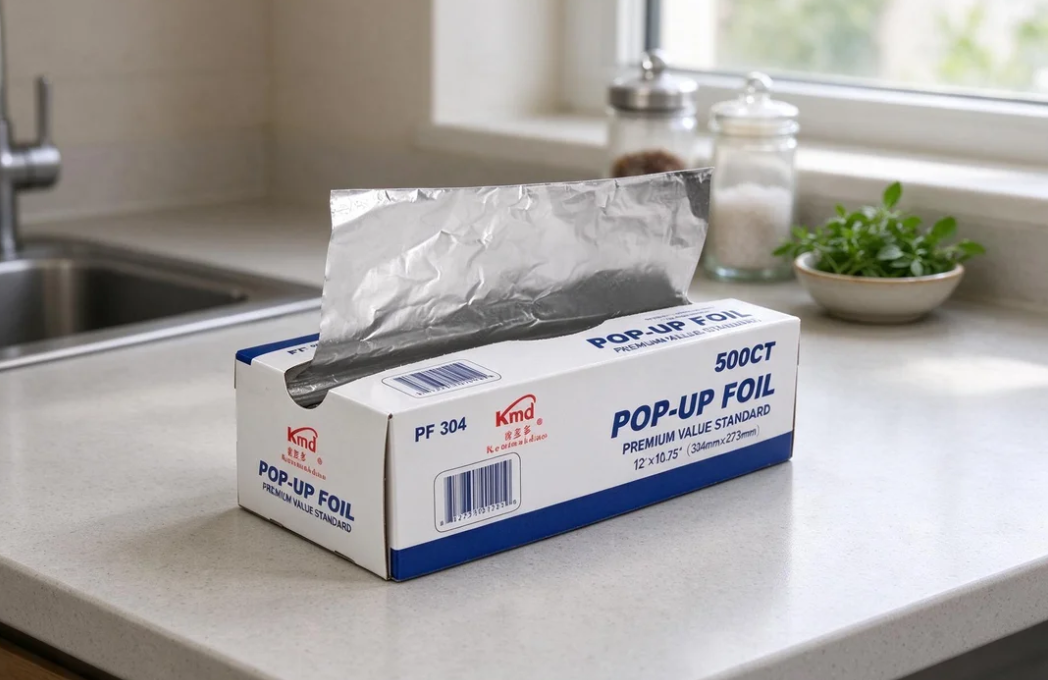
Common Specs of Interfolded Aluminum Foil Sheets: Length, Width, Folding Types & Pattern
Interfolded Aluminum foil sheets are widely used in food-service, household, catering, takeaway, and packaging applications where pre-cut and folded foil sheets offer a convenient alternative
Aluminum Foil Sheet vs Foil Roll: Which One Is Right for Your Production
When sourcing aluminum foil, buyers often need to choose between aluminum foil sheets and aluminum foil rolls. Although both use aluminum foil as the basic
How to Make Aluminum Foil Interleaving Sheets – Machine and Production Guide
Starting an aluminum foil interleaving sheet production line can be a practical opportunity for manufacturers and distributors supplying foodservice, restaurants, bakeries, catering companies, and household

Household Aluminum Foil Seasonal Demand: BBQ, Thanksgiving & Holiday Trends
Household aluminum foil is a year-round product, but demand is not always the same throughout the year. Cooking habits, outdoor grilling, major holidays, retail promotions,
Tinplate Saw Blade Binding Machine: Complete Guide for Color Box Packaging
When you buy a box of household aluminum foil or cling film, you may notice a small metal cutting blade fixed to one edge of