
When sourcing aluminum foil, buyers often need to choose between aluminum foil sheets and aluminum foil rolls. Although both use aluminum foil as the basic material, they are designed for different production and handling requirements.
The right choice depends on the final application, production volume, available equipment, labor cost, and how the foil will be processed.
In simple terms, foil interleaving is supplied as pre-cut sheets, while foil rolls are supplied in continuous rewinding form. Understanding this difference can help manufacturers avoid unnecessary equipment costs and choose a more efficient material format.
What Is Foil Interleaving?
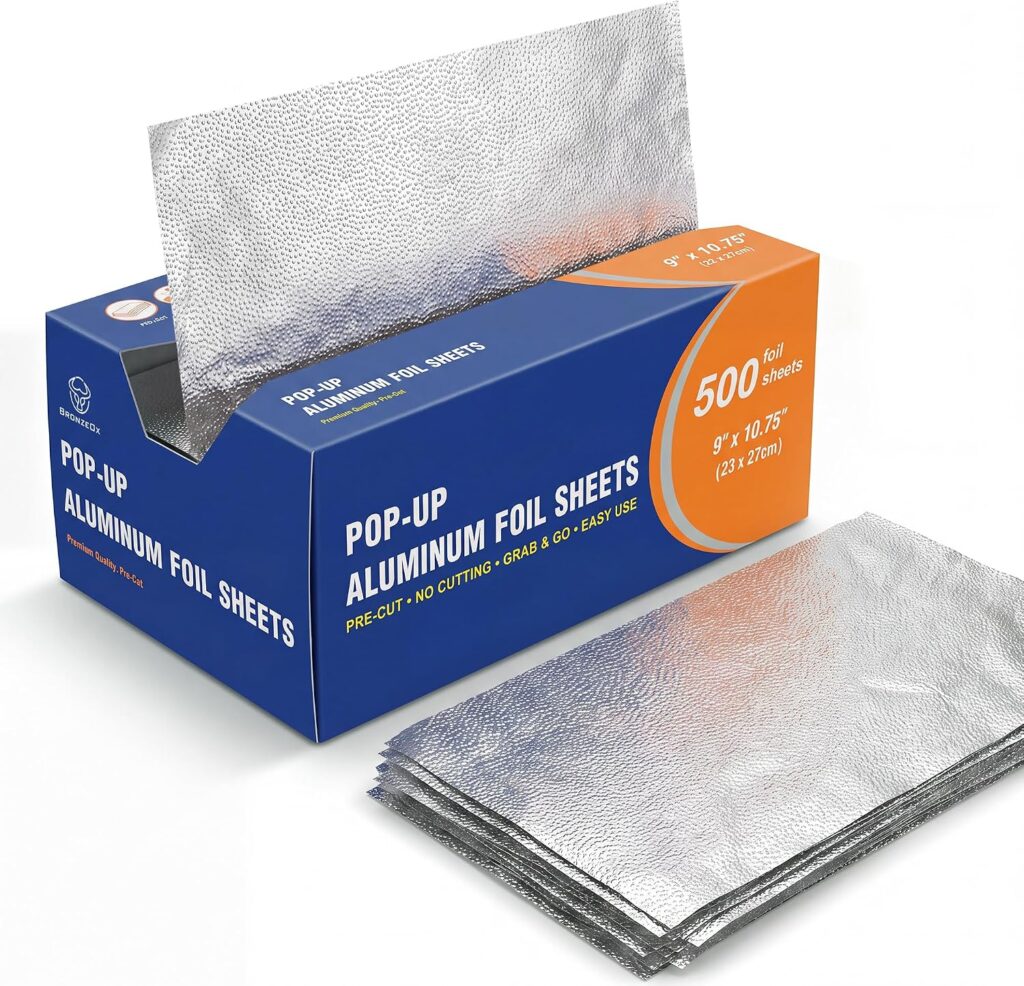
Foil interleaving refers to aluminum foil that has already been cut into individual sheets for use in a specific application. The sheets can be produced according to the required length and width.
The main advantage is convenience. Instead of purchasing a roll and cutting it before use, the buyer receives ready-to-use foil sheets.
Foil interleaving can be used in applications where individual pieces of aluminum foil are required for packaging, separation, protection, or further processing. The exact thickness, alloy, temper, and dimensions depend on the application.
From a sourcing point of view, buyers should confirm the sheet dimensions, thickness tolerance, embossing pattern, and packaging method before placing an order.
What Is an Aluminum Foil Roll?
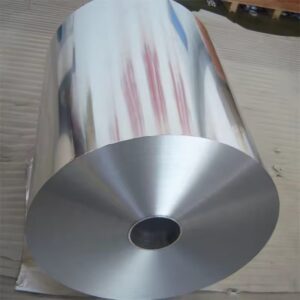
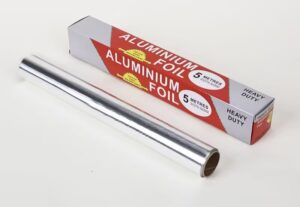
An aluminum foil roll is supplied in a continuous rewding roll. Depending on the application, it can be supplied as a large jumbo roll for industrial production or a smaller roll for household and commercial use.
Jumbo rolls are commonly used as raw material for processes such as:
- Foil Rewinding
- Foil Sheet cuttingn
- Aluminum foil container manufacturing
- Foil lid production
The main advantage of a roll is flexibility. A manufacturer can use the same basic material for different products by changing the width, cutting length, or downstream production process.
.
Foil Interleaving vs. Foil Roll – Key Differences
| Factor | Foil Interleaving Sheets | Aluminum Foil Rolls |
|---|---|---|
| Form | Pre-cut flat sheets, stacked | Continuous rewinding sheet on core |
| Handling | Manual or semi-automatic placement | Manual or require feed equipment |
| Production Process | Ready to use, no on-site cutting | Needs rewinding and cutting |
| Equipment Requirements | A pop up foil sheet making machine | Semi or fully automatic rewinder |
| Material Utilization | Lower scrap | Lower scrap with precise cutting |
| Storage | Bulky per unit weight | Compact, easier to store |
| Labor Requirements | Higher for manual placement | Lower for automated lines |
| Production Volume | Small to medium | Medium to high |
| Typical Applications | Separation, protection, manual packaging | Converting, automated packaging, household foil |
| Purchasing Considerations | MOQ may apply | custom specs available |
The most important practical difference is the workflow. Sheets are ready to use but cost more per unit. Rolls are cheaper per kilogram but require equipment and processing. In real production, the decision often comes down to whether you have the machinery and volume to justify roll material.
Conclusion
The choice between foil interleaving sheets and aluminum foil rolls mainly depends on how the material will be used.
Pre-cut foil interleaving is convenient when individual sheets are required and additional cutting is not practical. Aluminum foil rolls offer greater flexibility and are usually more suitable for continuous, automated, and high-volume production.
For buyers, the best decision should consider more than the material price. Production efficiency, scrap, labor, equipment, packaging, MOQ, and logistics can all affect the final cost.
If you are sourcing aluminum foil from China and are unsure which material format is suitable for your project, comparing suppliers and production requirements before ordering samples can help you make a more practical purchasing decision.
FAQ Section
What is foil interleaving used for?
Foil interleaving is used when aluminum foil is required in individual pre-cut sheets. The exact application depends on the required foil specification and product design.
Is foil interleaving cheaper than foil rolls?
Not necessarily. Pre-cut sheets may be more convenient, but they include additional cutting, handling, and packaging costs. For high-volume production, rolls may provide better overall production efficiency.
Can aluminum foil rolls be converted into interleaving sheets?
Yes. Aluminum foil rolls can generally be converted into sheets using a pop up aluminum foil sheet making machine.The required machine depends on the foil width, thickness, sheet size, and production volume.
Which is better for high-volume production?
Aluminum foil rolls are generally more suitable for high-volume and automated production because they can be continuously fed into downstream equipment.
What specifications should I confirm before ordering aluminum foil?
At minimum, confirm the alloy, temper, thickness, thickness tolerance, width, packaging, MOQ, and application requirements. For customized products, samples should also be checked before mass production.