
Starting an aluminum foil interleaving sheet production line can be a practical opportunity for manufacturers and distributors supplying foodservice, restaurants, bakeries, catering companies, and household markets.
Unlike conventional aluminum foil rolls, pop-up foil sheets are pre-cut and folded so users can pull out one sheet at a time from a dispensing box. This makes them convenient for food preparation and commercial kitchens.
However, starting this type of production line is not simply a matter of buying a machine. Sheet size, foil thickness, mother roll width, folding method, production speed, packaging, and raw material supply all need to be considered before placing an order.
This guide explains the main steps involved in setting up an aluminum foil interleaving sheet production line, using the standard pop-up foil sheets machine as a practical equipment example.
What Are Aluminum Foil Interleaving Sheets?
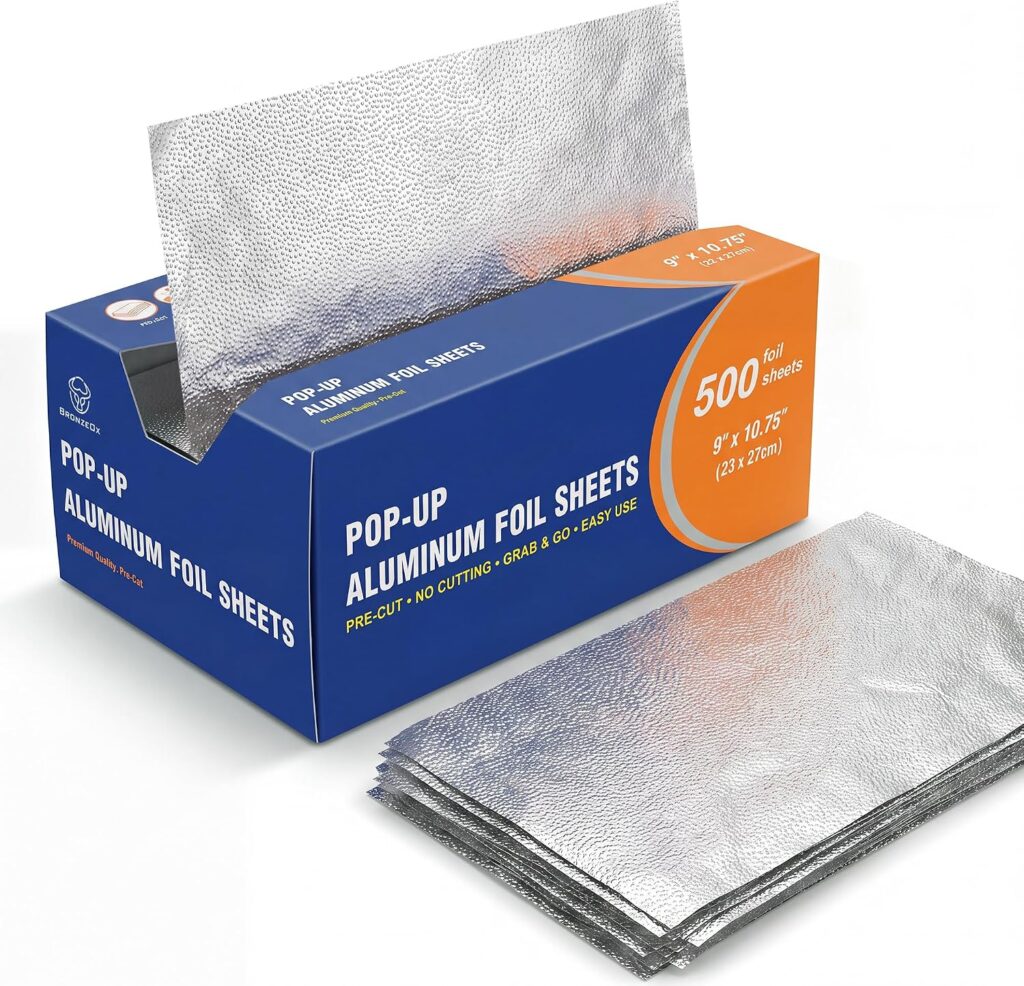
Aluminum foil interleaving sheets, also commonly called pop-up aluminum foil sheets, are individual pieces of aluminum foil that are pre-cut and folded before being packed into a dispensing box.
The sheets are normally designed with an interlocking V- or Z-fold. When the user pulls one sheet from the box, the folding arrangement helps bring the next sheet into position.
These products are commonly used for:
- Food preparation
- Restaurants and commercial kitchens
- Catering and foodservice
- Household kitchens
For a manufacturer, the main advantage is that the product is sold as a finished, convenient packaging item rather than simply as an aluminum foil roll.
How Does an Aluminum Foil Interleaving Sheet Production Line Work?
The basic production process is relatively straightforward:
Aluminum Foil Mother Roll → Feeding → Sheet Cutting → Interleaving → Counting → Stacking → Packing → Finished Pop-Up Foil Sheets
The exact line configuration depends on the finished product and the level of automation required.
In practice, the most important part is the sheet folding process. The machine needs to maintain stable foil tension while cutting and folding thin aluminum foil at high speed.
For this reason, buyers should confirm the final sheet dimensions and folding pattern before selecting the machine.
Step 1 – Choose the Right Aluminum Foil Raw Material
The first step is selecting suitable aluminum foil mother rolls.
The reference specifications include:
| Parameter | Specification |
|---|---|
| Raw Material | 8011 H22 Aluminum Foil |
| Foil Thickness | 9–20 micron |
| Mother Roll Core Diameter | 76 mm |
| Maximum Mother Roll Diameter | 800 mm |
| Available Mother Roll Width | Max. 635 mm & 950 mm |
From a buyer’s point of view, it is better to test the actual raw material before finalizing the machine. The same machine can behave differently depending on foil thickness, hardness, surface condition, and roll quality.
Step 2 – Select the Pop-Up Foil Sheets Machine
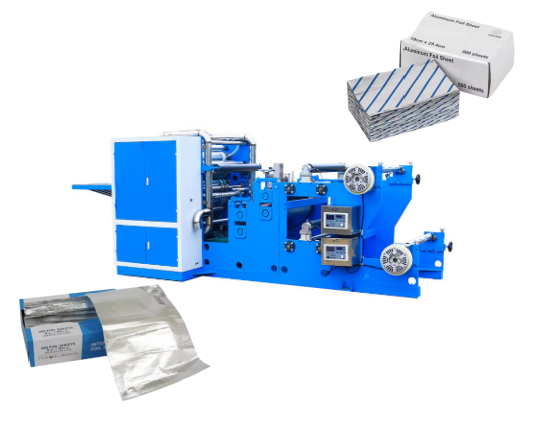
Standard foil sheet machine specifications include:
- Open sheet size: 273 × 304.8 mm
- Folded sheet size: 135 × 304.8 mm
- Folding method: V/Z shape interlocking
- Folding angle: 3–5 mm
- Production speed: 400–500 pcs/min × 2 or 3 lanes
The machine also uses a vacuum system and requires compressed air during operation.
The machine specification is only one part of the purchasing decision. A suitable machine should match the buyer’s target products, raw materials, packaging requirements, and expected production volume.
Step 3 – Confirm the Finished Sheet Size
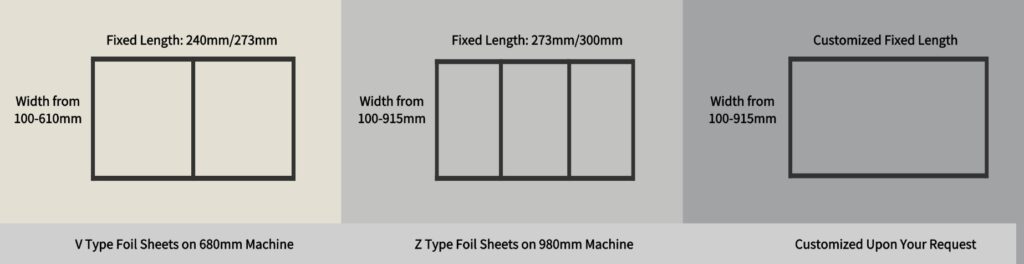
One of the most important decisions should be made before purchasing the machine: what size of foil sheet will you sell? The length size is fixed on machine.but the width is within 635mm or 950mm range based on machine size.
For example:
Open sheet size: L273 × W304.8 mm
After folding:
Folded sheet size: L135 × W304.8 mm
Sheet dimensions should be selected according to the target market and dispensing box.Before requesting a final quotation, prepare the following information:
- Open sheet size
- Folded sheet size
- Foil thickness
- Folding way,z or V type
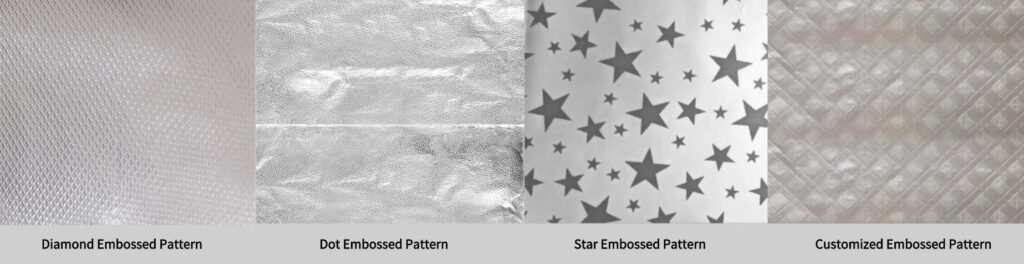
- Embossing Pattern
- Number of sheets per box
This makes it much easier for the machine supplier to recommend the correct configuration.
Step 4 – Choose the Folding and Interleaving Method
Flat aluminum foil sheets are relatively simple to produce. Pop-up sheets require an additional folding and interlocking process.
It uses a V/Z shape interlocking folding method with a specified 3–5 mm fold angle.
The purpose of the interlocking design is to make the sheets easier to dispense from a paper box.
The folding pattern can affect:
- Dispensing performance
- Sheet stacking
- Box design
- Finished product appearance
One point that is often overlooked is that the machine and packaging box need to be considered together. A sheet may look acceptable when stacked manually but may not dispense smoothly from the final retail box.
For this reason, testing the finished sheets inside the actual packaging box is recommended.
Step 5 – Calculate Production Capacity
Production capacity is another important factor when planning the investment.
Generally,400–500 pieces/minute × 2 or 3 lanes
For example, at 400 pieces per minute:
400 × 60 = 24,000 sheets/hour per lane
With two lanes:
24,000 × 2 = 48,000 sheets/hour
With three lanes:
24,000 × 3 = 72,000 sheets/hour
These are theoretical production calculations. Actual output can be lower because of material changes, machine adjustments, maintenance, operator breaks, startup waste, and other downtime.
Therefore, buyers should not calculate their business plan based only on the maximum machine speed.
A better approach is to estimate production using a realistic operating efficiency and then compare the output with expected market demand.
Step 6 – Prepare the Factory and Utilities
The production line also requires sufficient factory space and utilities.
Generally:
- Machine dimensions: 5000 × 2000 × 1700 mm
- Net weight: 4,000 kg
- Installed power: 27 kW
- Power supply: 380 V, 50 Hz, 3Ph + N + E
- Air pressure: 0.5–0.8 MPa
The installed power includes a 22 kW Roots vacuum pump, 4 kW main motor, and 1 kW tension system.
The machine footprint should not be treated as the total space required for the project.
You also need space for:
- Aluminum foil mother rolls
- Finished products
- Packaging materials
- Operator access
- Material handling
- Cartons and packaging
Before installation, it is a good idea to prepare a factory layout and confirm the required installation space with the machine supplier.
Step 7 – Plan the Packaging Process
After the aluminum foil sheets are produced and interlocked, they need to be counted, stacked, and packed.
If you wanna a fully automatic working process,you can add aluminum foil sheet cartoning machine to automate this process.
A typical process is:
Production → Counting → Stacking → Box Packing → Carton Packing
The number of sheets per box depends on the target market and product positioning.
The packaging box should be designed together with the sheet dimensions. The internal box dimensions need to provide enough space for the folded sheets without making dispensing difficult.
Step 8 – Estimate the Initial Investment
There is no single fixed cost for starting an aluminum foil interleaving sheet production line.
The total investment normally includes:
- Pop-up foil sheets machine
- Aluminum foil mother rolls
- Packaging boxes
- Cartons
- Air compressor
- Electrical installation
- Factory preparation
- Spare parts
- Shipping
- Customs and import costs
- Installation and commissioning
- Labor
- Working capital
The machine price is only one part of the project cost.
For example, a buyer may find a lower-priced machine but later spend more on installation, spare parts, packaging, or unsuitable raw materials.
From a project planning perspective, it is better to compare the total production setup rather than simply comparing machine quotations.
Step 9 – Estimate Aluminum Foil Consumption
Raw material is usually one of the largest ongoing costs in aluminum foil sheet production.
A basic material consumption calculation can be based on:
Sheet Size × Foil Thickness × Aluminum Density × Production Quantity
The actual consumption will also be affected by:
- Startup waste
- Production scrap
- Rejected sheets
- Material changes
For example, if the target product is a 273 × 304.8 mm sheet made from 15-micron aluminum foil, the theoretical aluminum weight can be calculated first. The actual production cost should then include the expected production waste.
It is better to run a production test with the actual foil material before making a detailed profit calculation.
Step 10 – Test the Machine Before Shipment
Before the machine is shipped, buyers should conduct a proper factory acceptance test whenever possible.
Important items to check include:
- Foil thickness compatibility
- Sheet dimensions
- Folding accuracy
- V/Z interlocking performance
- Lane synchronization
- Sheet counting
- Stacking quality
- Electrical components
- Safety protection
- Finished product quality
Ideally, the supplier should run the machine using the buyer’s actual aluminum foil or an equivalent material.
This is particularly important for thin foil between 9 and 20 microns, where material handling and tension control can have a significant effect on production stability.
Common Mistakes When Starting an Aluminum Foil Sheet Production Line
Buying the machine before confirming the product
Do not start with the machine. Start with the product.
Confirm sheet size, foil thickness, folding method, packaging, and target output first.
Focusing only on machine price
A cheaper machine is not necessarily cheaper to operate. Consider production stability, maintenance, spare parts, electricity consumption, and after-sales support.
Ignoring raw material availability
Even if the machine works well, the project may not be profitable if suitable aluminum foil is difficult or expensive to source.
Not testing the dispensing performance
The finished sheets should be tested in the actual box. The interlocking system needs to work smoothly during real use.
Underestimating factory space
A 5-meter-long machine still requires additional working and maintenance space around it.
Not checking after-sales support
Before purchasing, ask about installation, commissioning, spare parts, technical support, warranty, and response time.
How Much Does an Aluminum Foil Interleaving Sheet Production Line Cost?
The cost depends on the required production capacity, machine configuration, raw material specifications, packaging method, and destination country.
A basic project budget can be divided into:
Machine + Raw Material + Packaging + Utilities + Factory + Shipping + Installation + Working Capital
For an accurate quotation, buyers should provide the machine supplier with detailed information instead of simply asking, “How much is the machine?”
A useful RFQ could include:
“Please quote an aluminum foil interleaving sheet production line based on 10 micron aluminum foil, sheet size, V/Z folding method,embossing pattern, packaging quantity, and destination country.”
This gives the supplier enough information to recommend a suitable configuration.
Can a Sourcing Agent Help With the Project?
For buyers purchasing machinery from China, an independent sourcing agent can be useful when the project involves several suppliers and technical requirements.
A sourcing agent can help with:
- Finding suitable aluminum foil machine manufacturers
- Comparing different machine configurations
- Communicating technical requirements
- Comparing supplier quotations
- Verifying factory information
- Arranging factory visits
- Inspecting the machine before shipment
- Sourcing aluminum foil mother rolls
- Sourcing packaging materials
- Coordinating suppliers
- Consolidating goods
- Coordinating shipping from China
For a first-time investor, this can reduce some of the communication and supplier-verification work involved in setting up the project.
If you are planning an aluminum foil interleaving sheet project in China, we can help compare suppliers, check machine specifications, arrange factory inspection, and coordinate the sourcing process.
This is particularly useful when the buyer does not have experience with Chinese machinery suppliers or cannot travel to inspect the factory. An agent can also help catch specification mismatches before the order is placed, which is far less expensive than fixing them after delivery.
If you are planning an aluminum foil interleaving sheet project in China, we can help compare suppliers, check machine specifications, arrange factory inspection, and coordinate the sourcing process.
For related guidance, see China Machinery Sourcing Service and The Complete Guide to Starting an Aluminum Foil Container Manufacturing Business.
FAQ Section
What is an aluminum foil interleaving sheet?
An aluminum foil interleaving sheet is a pre-cut and folded piece of aluminum foil designed to be dispensed individually from a box. Pop-up sheets commonly use V- or Z-shaped interlocking folds.
What machine is used to make pop-up aluminum foil sheets?
A dedicated pop-up foil sheets machine is used to feed aluminum foil from a mother roll, form individual sheets, and fold them into an interlocking configuration.
What aluminum foil thickness can be used for interleaving sheets?
It supports aluminum foil thicknesses from 9 to 20 microns. The actual suitable thickness should be confirmed with the machine supplier based on the finished sheet and production requirements.
How fast can a pop-up foil sheet machine produce?
The reference production speed of 400–500 pieces per minute × 2 or 3 lanes, depending on the sheet specification and machine configuration. Actual production output depends on operating conditions and downtime.
What is the difference between V-fold and Z-fold aluminum foil sheets?
Both are folding methods used to create interlocking or pop-up sheets. The specific folding design affects how the sheets stack and dispense from the box, so the final packaging should be tested before mass production.
What raw material is needed for aluminum foil sheet production?
The main raw material is an aluminum foil mother roll. Buyers should confirm foil thickness, roll width, core diameter, maximum roll diameter, surface quality, and other material requirements with the machine supplier.
How much does an aluminum foil interleaving sheet production line cost?
There is no universal price because the total investment depends on machine configuration, production capacity, raw material, packaging, factory preparation, shipping, installation, and working capital.
What should I check before buying an aluminum foil sheet machine?
Confirm the required sheet size, foil thickness, folding method, production speed, lane configuration, raw material specifications, utilities, packaging requirements, spare parts, testing procedure, warranty, and after-sales support.