
When aluminum foil or baking paper is purchased in large mother rolls, the material still needs to be converted into smaller rolls before it can be sold to households, restaurants, supermarkets, or catering businesses.
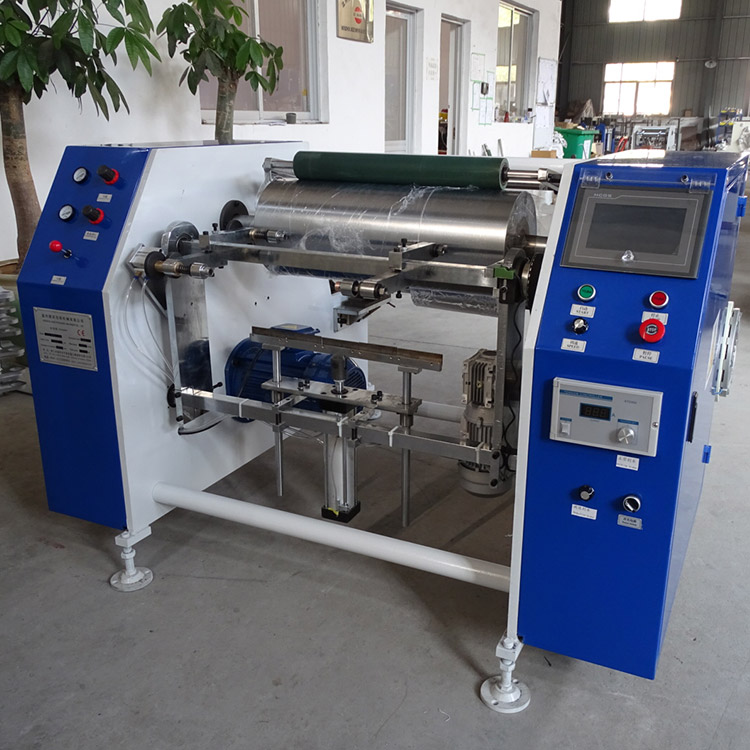
A semi automatic rewinding machine provides a relatively simple way to handle this process. It rewinds material from a large mother roll onto smaller cardboard cores and can automatically cut the foil when the required roll size is reached.
Compared with a fully automatic production line, a semi automatic machine requires more operator involvement, but it can also offer a simpler setup and lower initial investment. For small and medium-sized production operations, this can be a practical option.
This guide explains how a semi automatic rewinding machine works, what products it can handle, its main specifications, and what buyers should consider before ordering one.
What Is a Semi Automatic Rewinding Machine?
A semi automatic rewinding machine is used to convert large mother rolls of material into smaller finished rolls.
The operator loads the mother roll, prepares the cardboard cores, and handles some of the operations between finished rolls. The machine then performs the rewinding process and automatic foil cutting according to the configured production requirements.
The machine described in this guide has two spindles and supports a rewinding roll width of 100–500 mm. It is designed for relatively compact production setups and can be used for aluminum foil roll converting.
One important point is that this is a semi automatic, rather than fully automatic, system. Core replacement is manual, while gluing is also manual in the standard configuration.
What Products Can It Produce?
The main applications are aluminum foil rolls and, depending on material compatibility and machine configuration, baking paper rolls.
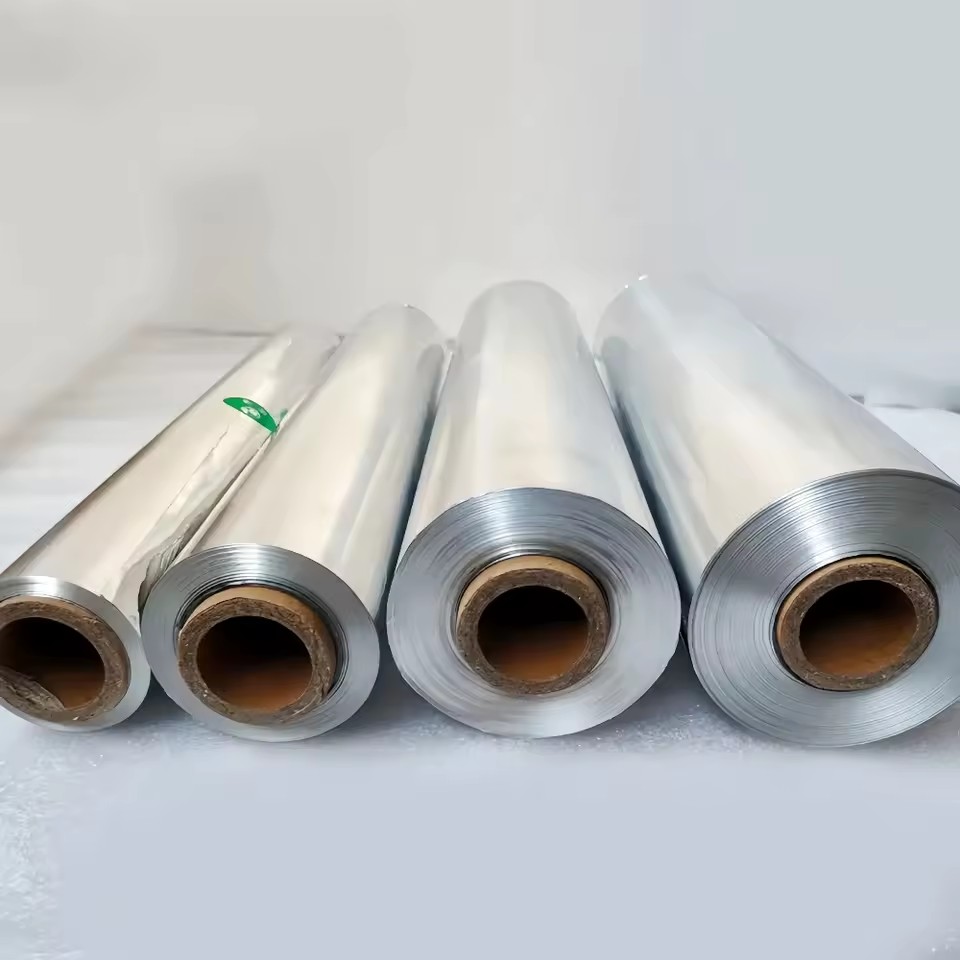
Aluminum Foil Rolls
The machine can be used to produce smaller aluminum foil rolls from large mother rolls.
Typical applications include:
- Household aluminum foil
- Catering foil
- Restaurant foil
The required finished roll size can vary significantly from one market to another. Household supermarket products, for example, may use different widths and lengths from commercial catering rolls.
For this reason, buyers should provide the supplier with their actual finished roll specifications before ordering.
Baking Paper Rolls
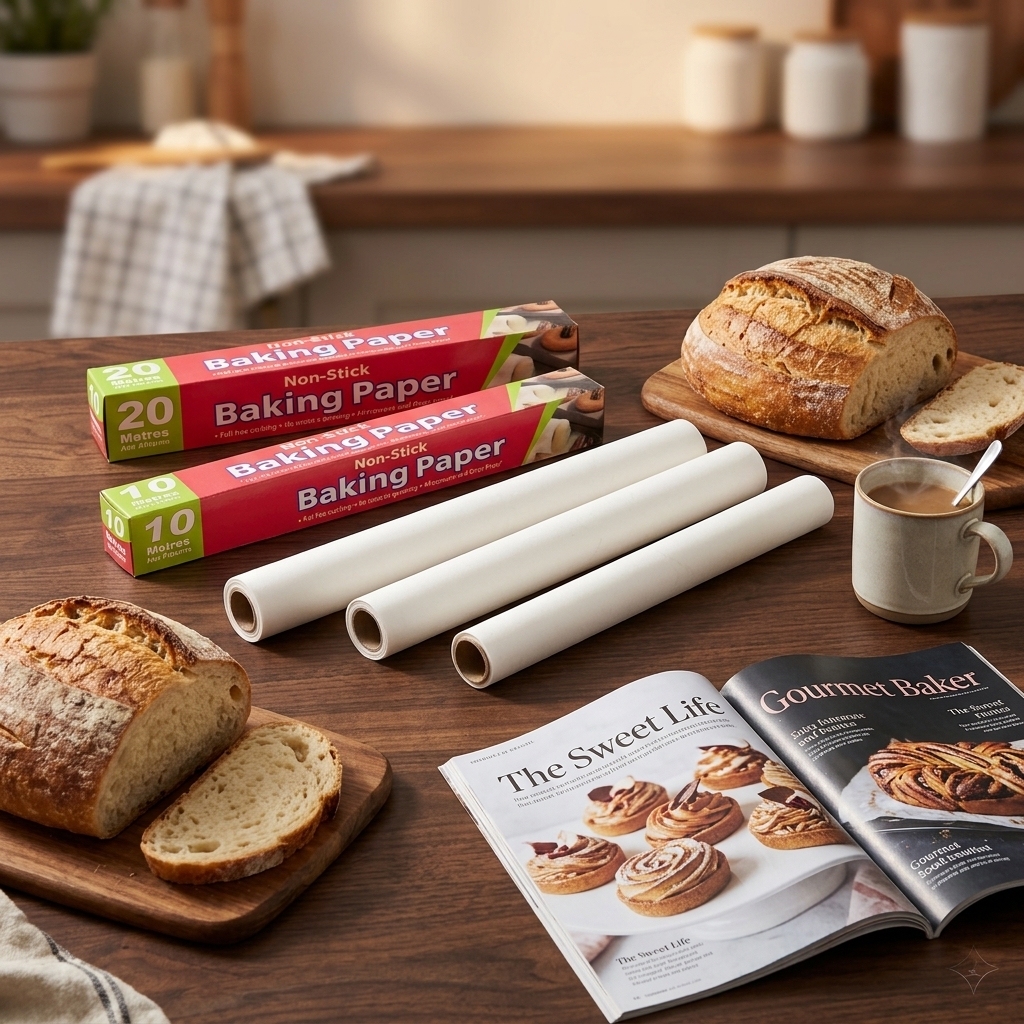
The same rewinding concept can also be applied to baking paper or parchment paper, provided that the material is compatible with the machine.
Typical products include:
- Baking paper rolls
- Parchment paper
- Household baking paper
Because paper and aluminum foil have different physical properties, the supplier should confirm the material specifications before production. If possible, testing the actual material is a good way to confirm the machine configuration.
How Does the Semi Automatic Rewinding Machine Work?
The operation is relatively straightforward.
1. Load the Mother Roll
The aluminum foil or other suitable material is loaded onto the unwinding section.
The machine supports a mother roll diameter of up to 700 mm, with a mother roll inner core diameter of 76 mm or 152 mm.
2. Prepare the Finished Roll Cores
Cardboard cores are installed for the finished rolls.
The machine supports a finished roll inner diameter of 30 mm or 38 mm, with a cardboard core thickness of not less than 3 mm.
Since core dimensions can vary between markets and products, buyers should confirm their exact requirements before ordering.
3. Rewind the Material
The material is fed from the mother roll and rewound onto the smaller cardboard cores.
The machine supports finished roll widths from 100 to 500 mm.
The rewinding roll outer diameter is specified as 45–130 mm, while the inner diameter is 30 mm or 38 mm.
4. Automatic Foil Cutting
When the required roll size is reached, the machine can automatically cut the foil.
This reduces the need for manual cutting and helps make the rewinding process more consistent.
5. Remove and Replace the Core
Because this is a semi automatic machine, the operator needs to remove the finished roll and replace the core manually.
This is one of the main differences compared with a more highly automated rewinding line.
6. Gluing
The standard configuration uses manual gluing.
For customers who want to reduce operator involvement, automatic gluing can be added as an optional function.
Main Specifications of the Semi Automatic Rewinding Machine
The following are the main technical specifications of the machine:
| Specification | Parameter |
|---|---|
| Rewinding roll thickness | 0.009–0.03 mm |
| Rewinding roll width | 100–500 mm |
| Rewinding roll inner diameter | 30 mm or 38 mm |
| Rewinding roll outer diameter | 45–130 mm |
| Production speed | 0–350 m/min |
| Cardboard core thickness | Not less than 3 mm |
| Number of spindles | 2 |
| Foil cutting | Automatic |
| Gluing | Manual; automatic optional |
| Core replacement | Manual |
| Mother roll diameter | 700 mm |
| Mother roll inner core diameter | 76 mm or 152 mm |
| Air supply | 0.5–0.8 MPa |
| Power supply | 380 V, 50 Hz, 3PH+N+E |
| Installed power | 3 kW |
| Machine dimensions (L × W × H) | 1200 × 1000 × 1000 mm |
The stated production speed range is 0–350 m/min. However, buyers should not treat the maximum figure as a guaranteed production speed for every material.
Actual working speed can be affected by material properties, roll dimensions, winding requirements, machine settings, and operating conditions.
Main Specifications of the Semi Automatic Rewinding Machine
Automatic Foil Cutting
Automatic cutting is one of the useful features of the machine. Once the required roll size is reached, the material can be cut automatically rather than being cut completely by hand.
Two Spindles
The machine is equipped with two spindles for the rewinding operation.
This configuration provides a straightforward solution for producing smaller foil rolls without requiring a highly complex production line.
Flexible Finished Roll Sizes
The machine supports a finished roll width range of 100–500 mm.
The specified finished roll inner diameter is 30 mm or 38 mm, while the outer diameter range is 45–130 mm.
This gives buyers some flexibility when producing different roll formats.
Compact Design
The machine dimensions are approximately 1200 × 1000 × 1000 mm.
Its compact size can be useful for small and medium-sized workshops where floor space is limited.
However, buyers should also consider space for material loading, finished roll handling, operator movement, and other equipment around the machine.
Optional Automatic Gluing
Manual gluing is the standard configuration, but automatic gluing can be added upon request.
This gives buyers the option to start with a simpler configuration and increase automation if their production requirements grow.
What Should Buyers Confirm Before Ordering?
Before requesting a quotation, prepare the following information:
1. Material type
Confirm whether you will run aluminum foil, baking paper, parchment paper, or another material.
2. Material thickness
The machine specifications should match the actual material thickness you plan to process.
3. Mother roll size
Provide the mother roll width, diameter, and core diameter.
4. Finished roll size
Specify the required finished roll width, outer diameter, and core diameter.
5. Production requirements
Tell the supplier your expected production volume and target working speed.
6. Gluing requirements
Confirm whether manual gluing is acceptable or whether automatic gluing is required.
7. Power supply
Check the electrical conditions at your factory before ordering. The stated machine specification is 380 V, 50 Hz, 3PH+N+E.
8. Air supply
The listed air supply requirement is 0.5–0.8 MPa.
Providing these details at the beginning can help the supplier recommend a more suitable configuration and avoid misunderstandings later.
Conclusion
A semi automatic rewinding machine offers a straightforward solution for converting aluminum foil and, subject to material compatibility, baking paper from large mother rolls into smaller finished rolls.
Its automatic foil cutting, two-spindle configuration, compact dimensions, and flexible finished roll sizes make it suitable for a range of small and medium-sized production applications.
For buyers, the most important step is to start with the finished product requirements. Before purchasing, confirm the material, thickness, mother roll dimensions, finished roll width and diameter, core size, production requirements, gluing method, and factory power supply.
If you are planning an aluminum foil or baking paper roll production project, you can provide these specifications to your machinery supplier. With the actual product information, the supplier can recommend a suitable semi automatic rewinding machine configuration rather than simply offering a standard model.
FAQ Section
Is this machine suitable for household aluminum foil?
Yes. It is designed for rewinding aluminum foil into smaller rolls, with a specified rewinding thickness range of 0.009–0.03 mm and finished roll width range of 100–500 mm.
Can the machine rewind baking paper?
It may be suitable for baking paper or parchment paper, but the actual material should be confirmed with the supplier before ordering. Material properties can affect the rewinding process.
What is the maximum production speed?
The stated machine speed is 0–350 m/min. Actual working speed depends on material characteristics, roll dimensions, machine settings, and production conditions.
Does the machine automatically cut the foil?
Yes. Foil cutting is listed as an automatic function.
Is automatic gluing available?
Yes. Manual gluing is the standard configuration, while automatic gluing can be provided as an option upon request.
Does the operator need to replace the core?
Yes. Core replacement is manual on the standard configuration.